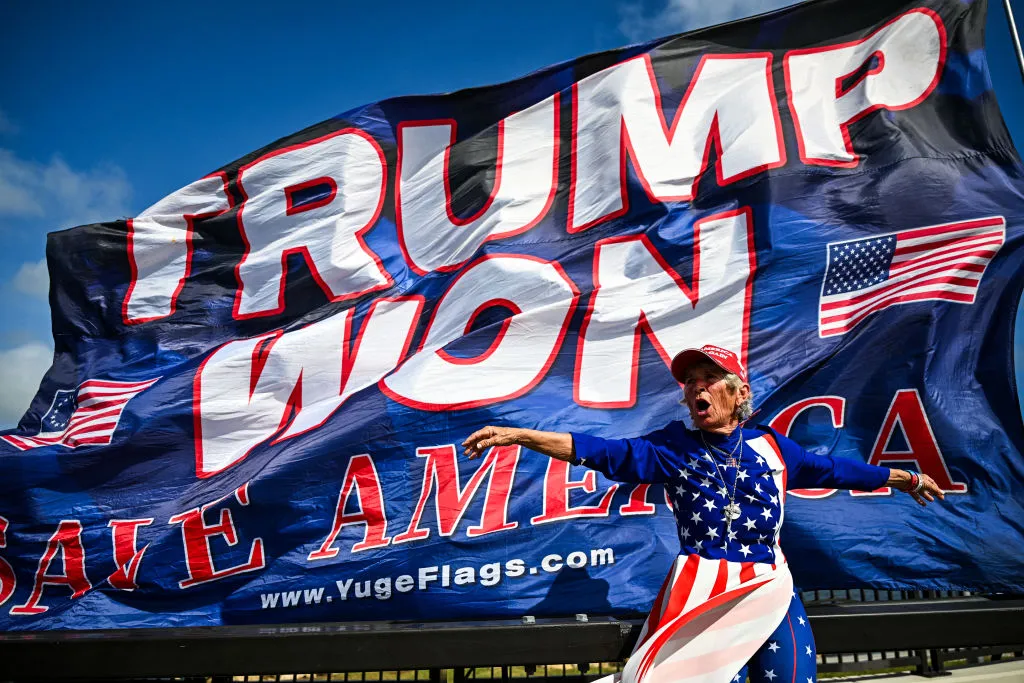
“Having doubts?” the billboards ask. “You are not alone”. They sound like ads for a Baptist pastor, beckoning believers to the flock. But rather than Christ and the Apostles, these signs, now plastered from the Pacific Northwest to Florida, encourage readers to break with the Gospel According to Trump. They are the brainchild of Rich Logis, himself a former Trumper, whose “Leaving MAGA” non-profit has plans to erect several more billboards, even as it continues to receive a record number of inquiries.
He has landed on fertile territory. Dismay over the Iran war and the Epstein Files — and a sluggish economy — mean that just 15% of Americans now “strongly approve” of the Commander in Chief. Yet despite the President’s record low approval ratings, a solid majority of Republicans, and an even greater share of MAGA Republicans, remain onside. In practice, that can make leaving the movement as painful as departing an actual church, with friendships ruined and communities torn apart. As Americans digest this week’s primaries, however, and the midterms edge closer, the pain of separation could offer useful lessons for Republicans and Democrats alike.
Steven Francisci knows the struggles of leaving MAGA better than most. A former naval cook, he’d voted for Trump twice. But then, last November, the Virginia resident decided to back Abigail Spanberger, a Democrat, in the Old Dominion’s gubernatorial race. Having made his home in Chesapeake, a Republican stronghold where nearly all his neighbours are Trump supporters, Francisci knew this decision would go down poorly. “I didn’t want them to treat me differently,” he tells me. “I didn’t want them thinking ‘oh Steve, you’re not one of those nuts are you?’”

After deliberating for a day or two, Francisci mustered the courage to plant an “Abigail Spanberger for Governor” sign on his front lawn. Spanberger duly won — but, within 24 hours, Francisci sensed something had changed. Neighbours who once asked after his kids became more distant, and conversations grew stilted. “Before I chatted with my friends and neighbours the whole time,” Francisci recalls. “But after that election, it was silent. I felt ashamed.”
This trauma can partly be understood by the depth of Francisci’s former loyalties. Until last year, he stood firmly on the Right, at times venturing into more extreme corners, consuming white nationalist content that included conspiracies about Barack Obama’s citizenship. As an early champion of “birtherism”, Trump gave these views a national platform, turning Francisci into an early convert. A fellow New Yorker by birth, he was also drawn to the businessman’s earthy, confrontational style.
How MAGA became the war party
After a series of personal setbacks — the breakdown of his marriage and a motorbike accident that left him on disability benefits — MAGA became, in effect, Francisci’s new community. “I felt like I was now part of something bigger than myself,” he explains. “I was part of a movement that was trying to make America better. There was a strong sense of belonging, shared language and community, where I felt a connection with people who shared similar beliefs and perspectives.”
In Francisci’s evangelical church, politics and religion regularly converged. Before and after service, the topic of conversation almost always turned to Trump, with congregants asking whether he was touched by the divine. “We would just start talking about politics and what we saw on Fox News,” Francisci says. “People really felt Trump was the chosen one. We all did.”
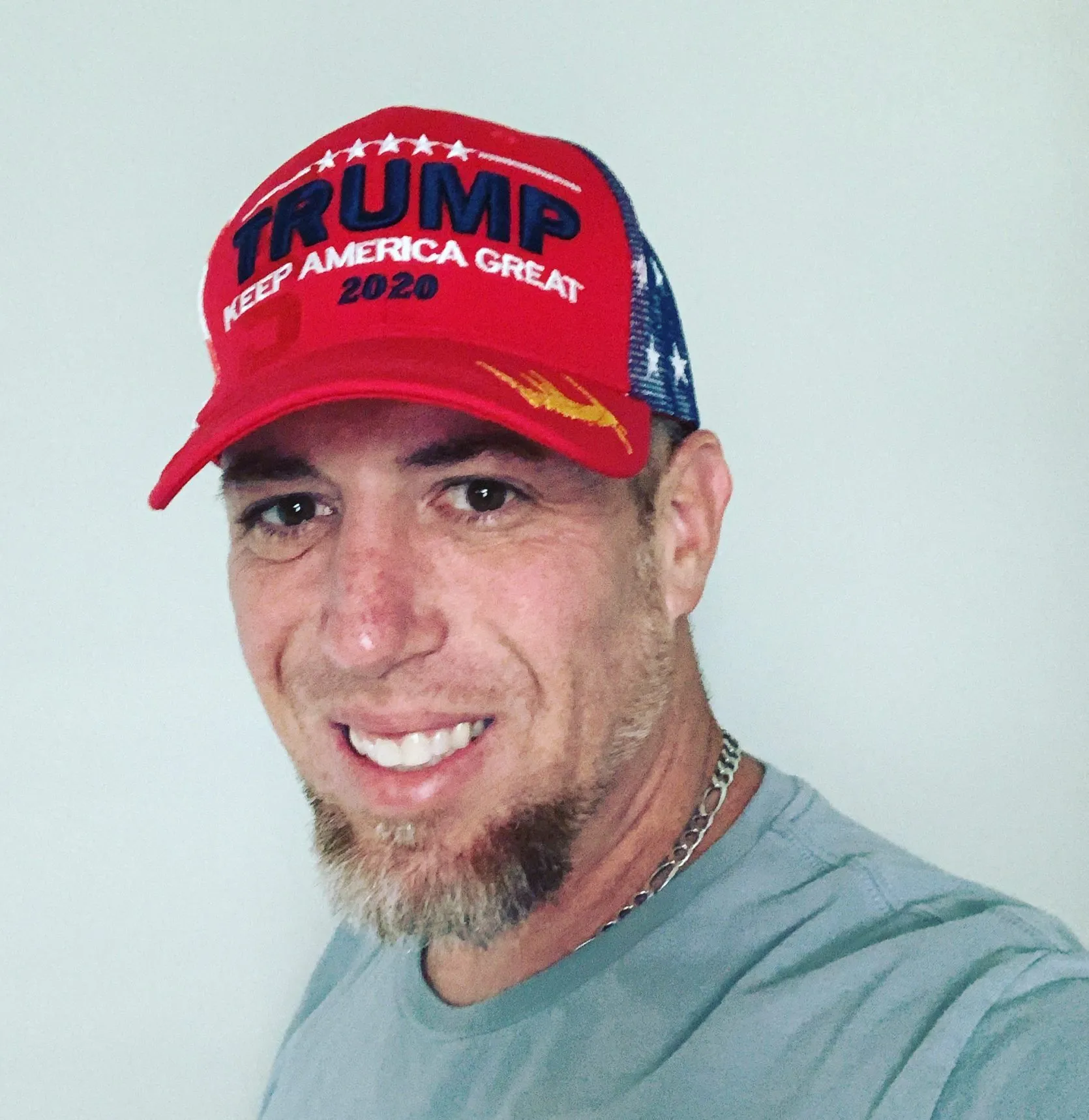
At the time, Francisci didn’t see the irony of talking about the chosen one in a house of God. He was so immersed in Trump lore that he genuinely believed that the President was the saviour; he was the only one untouched by the stench of corruption that wafted through DC. He really was going to drain the swamp. And yet, by the 2024 election, Francisci’s feelings had started to shift. There was no grand epiphany: rather, Trump’s claims about a stolen election, and his conduct on January 6, slowly began to gnaw at him. In the end, he put up that Spanberger sign, losing friends and family as he went.
Francisci’s journey — from diehard to apostate — can be spotted elsewhere too. In the space of a decade, Carter Brown went from being a QANON-supporting Trumper to leaving the movement altogether. Like with Francisci, the impact was swift and brutal. The day after she broke with Trump, the Georgia native describes feeling like she was in The Truman Show. She struggled to get out of bed each morning and couldn’t keep to any kind of normal routine around the house. “I was experiencing a complete identity collapse,” she says. “I didn’t know what was going to happen to my marriage. I didn’t know what was going to happen to the relationship with my friends, with my family.” Though Brown’s marriage ultimately endured, she says the last few years have been “extremely difficult”, especially as she’s lost several friends. Online, they questioned her, harassed her, even blocked her. “It was,” Brown says, “a complete ego death.”
Of course, these are extreme cases. But they do reflect a wider truth about the strength of MAGA identity. It functions as a worldview, a belief system, and a community, all wrapped up into one. I caught a glimpse of this while covering a Trump rally in Schnecksville, Pennsylvania, in 2024. After Trump finished speaking, I stopped at a nearby bar, where almost everyone was wearing MAGA hats, shirts, and assorted pieces of anti-Biden regalia. I was immediately struck by the camaraderie in the room; bikers played pool with bricklayers, locals bought drinks for out-of-towners, and bartenders shared cigarettes with regulars. Whether they knew each other or not, a baseline of trust had already been established.
“When I supported Trump, there was this kind of camaraderie that you don’t have on the Left,” John, who spoke to UnHerd using a pseudonym, tells me. “We had this bunker mentality where it was us against everyone else because that was the counter-culture during the early 2020s.” John, who was living in Orlando, Florida at the time, said he was drawn to Trump’s outsider appeal, believing that he would disrupt the uniparty consensus. “Until Trump,” he explains, “it just felt like every single politician sounded basically the same. It was just whether you were waving a blue or red flag. At the end of the day, they were still bombing, corruption was everywhere, and they were beholden to special interests.”
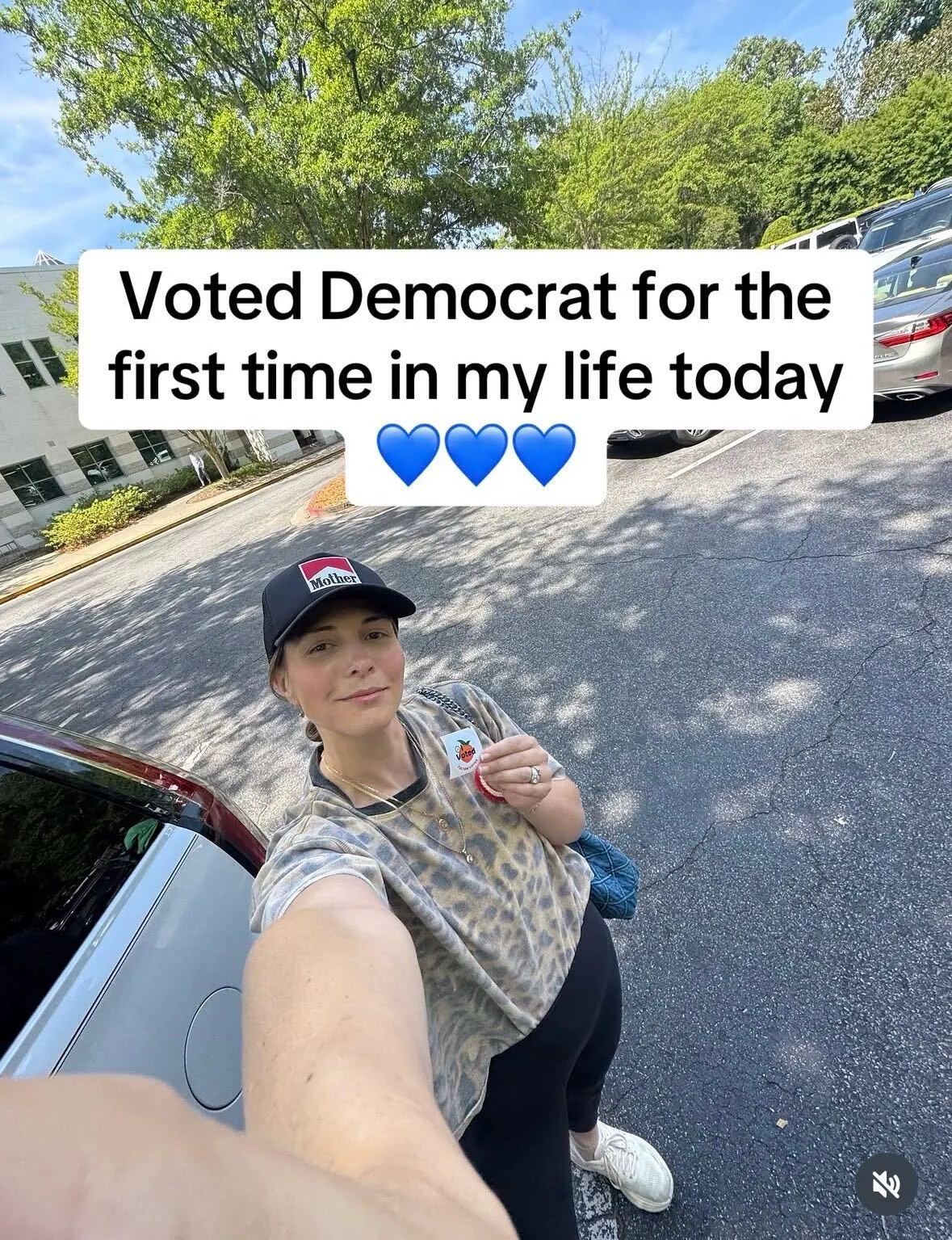
John later realised that Trump was no different, though he still enjoyed the fellowship that came with the movement. He tells me about the story of when his boss caught him watching a Stephen Crowder podcast at work, and summoned him to his office. “I thought ‘oh fuck, this isn’t good’”. Yet rather than confronting him, John’s boss revealed himself as a Crowder fan too. “From that point on, we always — under wraps — had each other’s back.”
As recently as, say, 1996, changing political allegiances was as anodyne as switching supermarkets. But as the country has become more polarised, with millions of Americans seeing their political rivals not just as wrong but as immoral, the social cost of abandoning one’s tribe has grown ever steeper. That cost is especially acute on the Right, where most Republicans have spent over a decade rallying around a single figure, with their loyalty hardened by Russiagate, two impeachments, multiple criminal indictments and a pair of assassination attempts.
Donald Trump: false prophet
Does that make MAGA, as many on the Left argue, a cult? When literal gold statues of the movement’s leader are being erected, there are certainly some parallels. But it is also true that MAGA support for the President is not monolithic, as increasingly vocal criticisms from influential figures within the broader Right-leaning media ecosystem — including Tucker Carlson, Megyn Kelly and Shawn Ryan — have shown.
Just yesterday, Carlson floated the idea of a “new path forward”, after claiming that MAGA had been “betrayed”. He was pictured alongside other exiles, including Marjorie Taylor Greene, Joe Kent and Thomas Massie, all of whom appear to be jockeying for the MAGA throne once Trump departs.
However, the very source of MAGA’s strength could also be the cause of its undoing. As the primary defeats of Massie, Bill Cassidy and John Cornyn vividly demonstrate, today’s Republican party still belongs to Trump. The President does not tolerate dissent, and anyone who challenges him is swatted away by the base. But if MAGA’s fate is so closely entwined with the one man, it has little chance of outliving him. For the fact remains: Trump made MAGA, led MAGA, and to a significant extent, is MAGA. This is something the President himself seems to recognise. Earlier this year, when asked whether his decision to abduct Venezuela leader Nicolás Maduro was a betrayal of his “America First” campaign promises, Trump responded: “MAGA loves what I’m doing. MAGA loves everything I do. MAGA is me.”
Perhaps polarisation is now so entrenched in America that MAGA voters will line up behind any candidate in the Republican column. But it is difficult to imagine a President Vance or Carlson commanding the same level of loyalty among their followers. How would Republicans react, for instance, if Vance said, as Trump did, that he did not think “even a little bit” about Americans’ financial situation on the eve of the midterms?
Trump is a sui generis figure, and any candidate trying to emulate him risks looking like a pale imitation. In some ways, this could benefit the Republican Party. It may force the next generation of leaders to articulate a more coherent political vision, one rooted in MAGA’s original principles: avoiding foreign wars, draining the swamp and reviving America’s industrial heartlands. It may also compel the party to build a broader and more durable coalition, one held together by ideas and interests rather than loyalty to a single man.
Democrats, for their part, can learn from this too. Formerly core constituencies of the party — working-class voters, African Americans, Hispanics — have drifted Right, while Democrats have struggled to find a message that resonates beyond their activist base. The botched release of the DNC’s report into the 2024 election shows that this is still a party riven by internal divisions, as evidenced by the divisive primaries in Maine and Michigan. Until it can find a candidate who can appeal to a broader cross-section of voters in 2028, it will continue to flounder.
Back in Chesapeake, life is easier for Francisci now. Since leaving MAGA — and stepping away from his church at the same time — he has rebuilt his social network, made new friends, and reconnected with family members. He now tries to support others who are thinking about leaving the movement, though he is careful not to proselytise, lest he take on the role of the evangelist once more. “I walked away from Trump and I walked away from Christianity,” he says. “No more conversions for me.”
James Billot is UnHerd’s Newsroom editor.