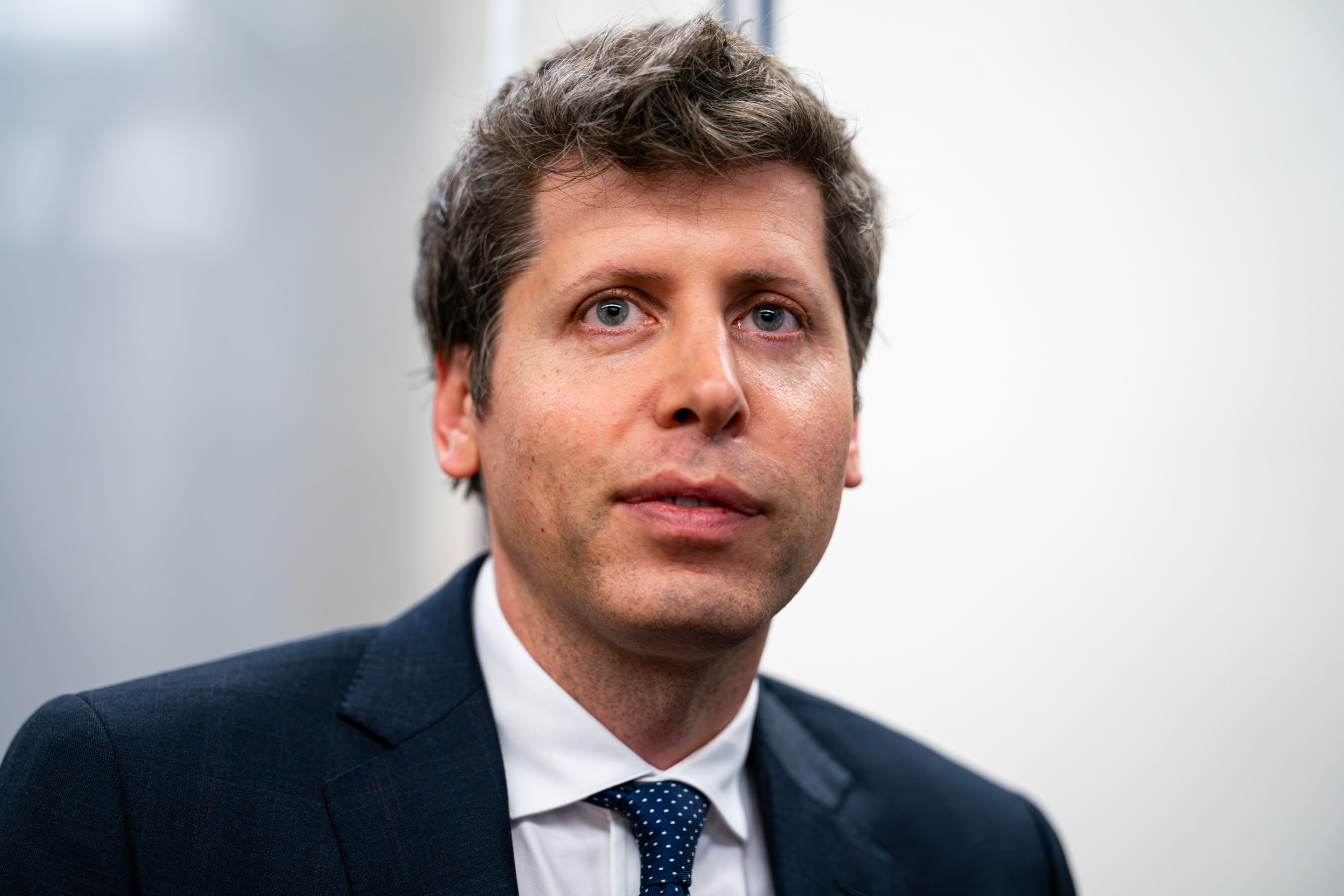
With an $852 billion valuation, OpenAI is one of the world’s most valuable startups. But unlike many Silicon Valley CEOs, Sam Altman’s fortune isn’t tied to his AI company’s soaring valuation.
Altman notably owns no equity in OpenAI and has historically taken a salary of roughly $76,000 a year. Even so, Altman has amassed a net worth of more than $3.3 billion, and in a recent interview, Altman credited venture capitalists Peter Thiel and Paul Graham with teaching him the investing philosophy that helped shape his multibillion-dollar portfolio.
“I really learned from Peter Thiel and Paul Graham, both in two different ways, which is that the very best companies, the very best investment opportunities are almost never the ones that look really popular,” Altman said on the Invest Like the Best podcast in an episode released last week.
“You can do okay just following the trend of being a little early, but to do spectacularly well, you almost always have to do things that are not what everybody else is doing. You cannot be following the new wave.”
Altman has put that approach into practice throughout the 41-year-old’s two decades in Silicon Valley. He and his venture funds have stakes in some 400 companies, according to the Wall Street Journal, including early bets on Reddit, Airbnb, and Stripe. Forbes added that one of his largest investments is a $1.65 billion stake in nuclear fusion firm Helion, which he first invested in around 2015.
Before OpenAI, Altman dropped out of Stanford and climbed the ranks in Silicon Valley’s startup scene
While Altman has become a household name only in recent years through OpenAI, he has been a fixture in Silicon Valley for more than two decades. His first company, Loopt—a location-sharing startup he founded shortly before dropping out of Stanford University in 2005—caught the attention of Paul Graham, the entrepreneur and investor who cofounded startup accelerator Y Combinator. Graham became one of Loopt’s earlier investors and later recruited Altman to lead Y Combinator.
Altman has said that Graham taught him that being a startup investor is “like being a flight instructor.”
“The person who sits next to you saying, like, ‘Do this, don’t do this, that worked, you missed that thing,’ or, ‘you’re making these mistakes,’ and ‘I’m just going to talk [to] you about this one,’” Altman said—according to Business Insider—adding he appreciated hands-on mentoring.
After selling Loopt in 2012, Altman used the proceeds to launch his first venture fund, Hydrazine, named after the rocket fuel. The fund’s largest outside investor was billionaire Peter Thiel, who cofounded PayPal and Palantir and was Facebook’s first outside investor. Today, Thiel has an estimated net worth of about $27 billion.
Altman went on to serve as Y Combinator’s president from 2014 to 2019, cementing his place among Silicon Valley’s most influential startup investors.
Successful investment requires independent thinking, according to Peter Thiel and Warren Buffett
While Altman said the biggest investing opportunities often come from avoiding the crowd, some of the world’s top investors have said it doesn’t help to take the opposite side simply for the sake of it.
Thiel, who built a reputation as one of Silicon Valley’s most successful contrarian investors, has long argued that the goal isn’t to reflexively disagree with conventional wisdom but to think independently.
“The most contrarian thing of all is not to oppose the crowd but to think for yourself,” he said in his book Zero to One: Notes on Startups, or How to Build the Future.
That philosophy extends well beyond venture capital. Warren Buffett, for example, has similarly argued that successful investing requires keeping emotions in check when markets swing wildly.
Speaking at Berkshire Hathaway’s 2010 shareholders meeting, Buffett said, “If you have a temperament that when others are fearful you’re going to get scared yourself, you know, you are not going to make a lot of money in securities over time, in all probability.”