Good morning. Somehow, it’s August. Hope your inbox isn’t too full.
Centuries of thinkers have promised us that technology will afford us shorter workweeks and more leisure time, but it hasn’t panned out. Ben Franklin’s four hours of daily useful labor? Not quite. John Maynard Keynes’ 15-hour workweek? Not a chance. Bill Gates’ AI-driven two-day workweek? The jury’s still out, but if I was a betting man…
Unless you’re French, of course. In that case, enjoy your annual vacances—tech be damned.
Today’s news follows. —Andrew Nusca
P.S. Don’t miss UnHerd tech maestro Alexei Oreskovic’s look at electric air taxis in our latest print issue.
Want to send thoughts or suggestions to UnHerd Tech? Drop a line .
Alibaba says its latest Qwen AI model beats Moonshot’s Kimi K3
America’s Next Top AI Model, meet your Chinese counterpart.
As in the U.S., the tit-for-tat AI model competition in China means each week brings a new model touting its supremacy over what came before.
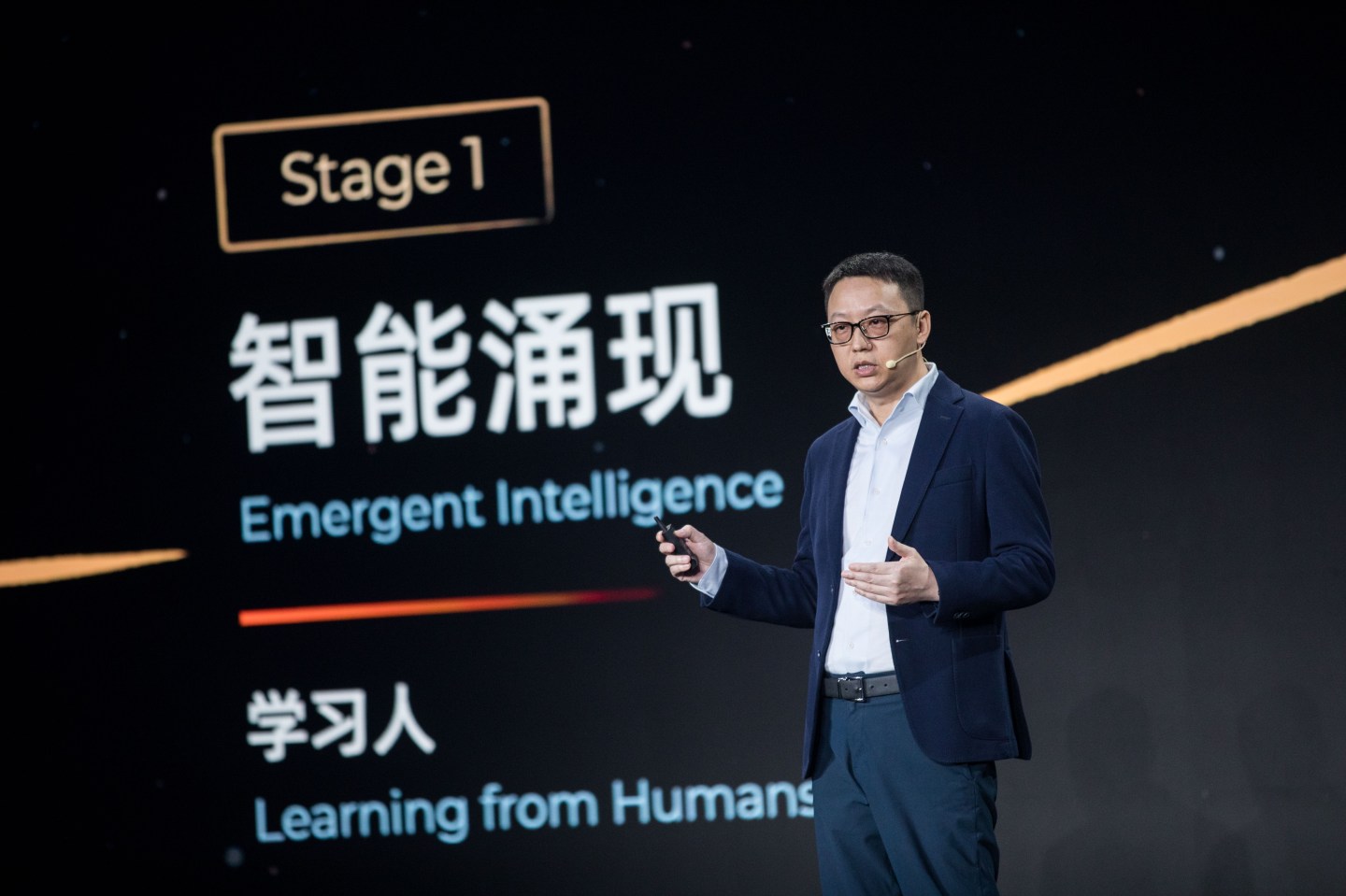
The latest challenger comes from one of China’s biggest tech companies. Alibaba says its latest AI model, Qwen3.8-Max, edges out startup Moonshot AI’s Kimi K3 on key benchmarks.
Kimi K3, launched on July 16, has captured global attention to a degree not seen since the rapid ascendance of DeepSeek’s R1. It is, for now, the top model to be toppled.
Alibaba says its new flagship Qwen model is tuned for autonomous coding, complex research, and other “long horizon” tasks. Like Kimi K3, it is a “mixture of experts” model that can interpret text, images, and video.
“Qwen3.8-Max doesn’t just follow a fixed plan,” the company wrote in a blog post. “It self-evolves through feedback loops, whether that means building a harness that upgrades itself, refining a research method experiment after experiment, or climbing a competition leaderboard submission after submission.”
There’s a small divide between the models on the speeds and feeds front. The new Qwen has 2.4 trillion parameters—the considerations it uses to learn, recognize patterns, generate answers, and so forth—in contrast to Kimi K3’s 2.8 trillion.
Still, Qwen3.8-Max only uses 95 billion parameters at a time—versus Kimi K3’s 104 billion—in an attempt to control costs and response delays.
But the biggest triumph of the new Qwen might just be the process that gave rise to it. Alibaba’s preceding flagship model, Qwen 3.7, launched just two months before its successor; Kimi K2 meanwhile launched a full year before K3.
“The speed at which the Qwen team ships models is starting to look ridiculous,” wrote Mehul Gupta, a data scientist for DBS Bank. “Every few weeks there’s another release, another benchmark climb, another attempt to dominate reasoning leaderboards.” —AN
Are China’s memory makers ready for the spotlight?
Chipmaker ChangXin Memory Technologies, or CXMT, became China’s most valuable company almost overnight.
CXMT’s shares surged over 500% in its Shanghai debut on July 27 and rallied throughout the week. By week’s end, its market capitalization hit 3.54 trillion yuan ($523 billion), toppling the reigning chart leader, the Industrial and Commercial Bank of China.
Yet experts are split on whether the rise in CXMT’s stock price reflects a temporary boost or a long-term shift that brings Chinese chipmakers to the fore.
“China is clearly becoming a more important memory chip player, but this is happening in a market distorted by AI demand, supply shortages and state-backed industrial policy,” says Barbora Valockova, a research fellow at Singapore’s Lee Kuan Yew School of Public Policy. “It does not yet mean China is broadly catching up to the leaders across the full chip stack.”
Though shortages are forcing companies to explore Chinese chip supplies, adoption is still likely to be selective and politically contested, especially in the U.S.
On July 30, a group of U.S. lawmakers penned a letter to Apple CEO Tim Cook, urging him to abandon any efforts amid a global memory shortage to buy chips from ‘blacklisted’ Chinese semiconductor suppliers like CXMT and Yangtze Memory Technologies Co., or YMTC.
Kong Tuan Yuen, a research fellow from the National University of Singapore, argues that while the memory shortage will boost demand for Chinese chips, most global firms will still look to CXMT only as a secondary source.
“While it may be necessary for companies to diversify their supply chains,” he said, “they will maintain multiple sources of supplies that are located in different geographic locations to mitigate long-term geopolitical risks.”
Most firms will likely also opt to use SK Hynix, Micron or Samsung chips as their primary source, since CXMT still incurs higher costs in chip manufacturing, Rolf Bulk, Futurum's head of semiconductor and infrastructure equity research, told CNBC.
“CXMT is still two to three generations behind,” he said, “when it comes to the performance of their chips.” —Angelica Ang
SpaceX’s record IPO is helping spur a new wave of startups
Investors and founders say SpaceX’s blockbuster IPO is helping transform space from a government-dominated industry into a supercharged startup market ripe for disruption.
Investment in the space industry had already accelerated in anticipation of the listing with global funding for space companies reaching an all-time high $7.95 billion in the first quarter, nearly double the $3.93 billion invested during the previous three months, according to Seraphim Space data. Investors completed 159 transactions during the quarter, bringing the trailing 12-month total to a record 654 deals.
These startups aren’t limited to building rockets and satellites. They include Beyond Reach Labs, which is building solar panels for space that can expand from the size of a dining table to the size of a football field, and Galactic Resource Utilization Space, which is aiming to build the first hotel on the moon.
Keval Desai, founder and partner at early-stage investment firm Shakti VC, told UnHerd that SpaceX’s IPO could have as big an impact on the space industry—plus communications, drug development, and orbital computing—as Amazon’s 1997 listing was for e-commerce.
“The next decade in space is going to be full of startups,” he predicted. “Not just the large companies and the governments, but startups, or the true Silicon Valley entrepreneurial ecosystem participating in the space commerce economy.”
Challenges remain. Developing products takes advanced knowledge that can only be accessed through a limited talent pool. Dealing with regulations, sometimes across international borders, is also a challenge. And funding for space-related startups is still relatively scarce.
But expect the capital markets to open for entrepreneurs building the next billion-dollar businesses.
“We’ve just added a massive total addressable market,” he said. “It’s not just Earth, but also space that is the playing field.” —Marco Quiroz-Gutierrez
More tech
—Hidden debt at five U.S. tech giants has ballooned amid the AI arms race.
—Chinese VC firms are raising new funds amid enthusiasm for AI and robotics.
—Is U.S. law prepared for rogue AI agents? Not really!
—Apple MacBook Air inventory is succumbing to the global memory shortage.
—Six years of development, hundreds of millions of dollars spent, beset by delays: Lightspeed’s Last Sentinel was supposed to be Tencent’s take on Grand Theft Auto.
—Mexico is now the second-largest supplier of servers to the U.S., behind Taiwan.
—Researchers used AI-assisted code to tamper with scans of physical DNA evidence.