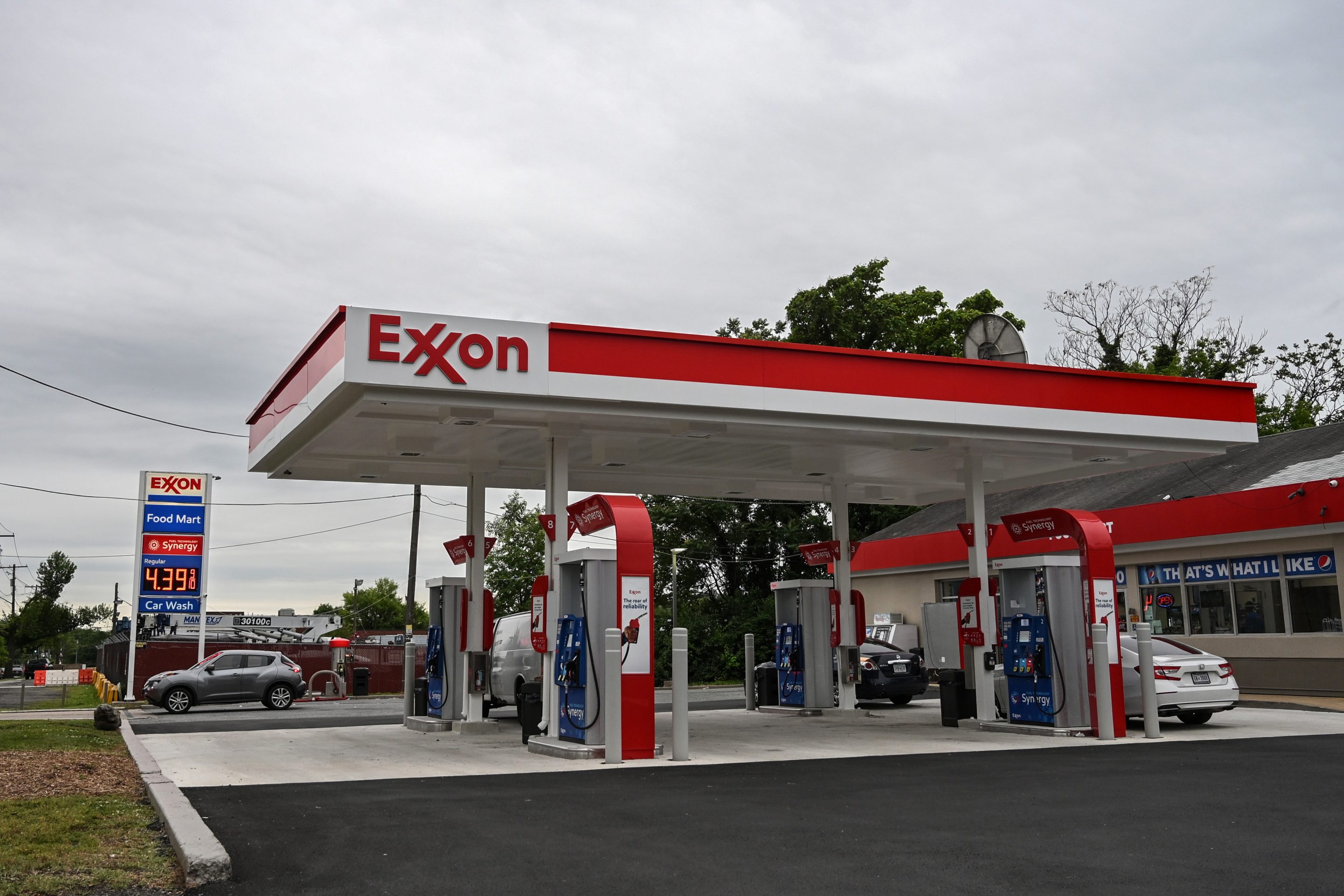
High fuel prices are likely to stick around even if oil prices drop in the coming months as the wars in Russia and Middle East leave global refining capacity critically short, ExxonMobil Holdings Corp. and Chevron Corp. warned.
Gasoline, diesel and jet fuel prices typically rise and fall with crude oil. But that link is growing tenuous because so many refineries have been knocked offline, causing fuel prices to remain stubbornly high and accelerating inflation even as oil falls.
“The constraint pain point in the energy system is refining,” ExxonMobil Chief Financial Officer Neil Hansen said in an interview. It’s “something that perhaps the market isn’t fully focused on.”
Nearly 10% of the world’s ability to refine crude oil is effectively offline with the Strait of Hormuz largely closed, continued Ukrainian attacks on Russian refineries and China’s export ban, according to Melius Research. It means the refineries left are running flat out to meet demand, rendering them unable to produce more fuel even if the oil is available for them to process. The result is record-high fuel-making margins that benefit refinery owners but drive up costs for consumers.
Read More: Global Fuel Markets Are Out of Slack as Wars Push Prices Higher
The trend is evident in the US, where the average price of gasoline has crept up above $4 a gallon to the frustration of drivers and politicians, including President Donald Trump, who has criticized Big Oil in recent weeks for not bringing down costs fast enough. Retail gasoline prices are just 10% below this year’s peak in May, even though West Texas Intermediate is down 26% from its 2026 high.
Refining “is obviously the bottleneck in the petroleum system right now, and margins are exceptionally high,” said Neil Mehta, an analyst at Goldman Sachs Group Inc.
The real pain point is in middle distillates, which includes diesel, jet fuel and heating oil, according to Chevron CEO Mike Wirth. Retail diesel prices are just 6% below their highs this year even though the drop in WTI has been four times as much. The market is likely to tighten further as countries in the northern hemisphere restock heating oil ahead of winter, Wirth said.
“I think we’re going to see some upward pressure on product pricing here into the third quarter and perhaps beyond that,” he said.
Gasoline prices are beginning to disconnect from oil prices, instead trading on storage levels, or inventories, according to Rob Thummel, senior portfolio manager at Tortoise Capital Advisors LLC.
Refined product inventories “are approaching historical lows,” he said. “The gasoline price is not as much being represented by the movement in oil prices but more so the movement in inventories.”
ExxonMobil, which operates the world’s biggest refinery network outside of China, sees the trend advancing for the foreseeable future because about 5 million barrels a day of refining capacity is unable to reach the global market.
“I’ve never seen the available capacity relative to demand as low as it is today,” ExxonMobil CEO Darren Woods said on a call with analysts. “It’s going to take a while for the industry to climb its way out of that hole.”
It’s not the first time this year oil industry participants warned about the stark dangers to the energy system. Some analysts said oil could hit $200 a barrel if the Strait of Hormuz remained shut for an extended period, but it never got close to those levels despite the protracted conflict.
This time it could be different.
ExxonMobil’s Gulf Coast refineries ran at a utilization rate of 95% in the second quarter, while Chevron’s US facilities ran even harder, at 97%, showing there’s little room for error. Shell Plc ran its refineries at 102% in the period but expects this to drop this quarter due to the need for scheduled maintenance.
“The geopolitical uncertainty has tightened markets and is reinforcing the importance of reliable supply,” Chevron CFO Eimear Bonner said in an interview. “The shock absorbers that have mitigated the volatility up until now, those continue to be drawn down.”