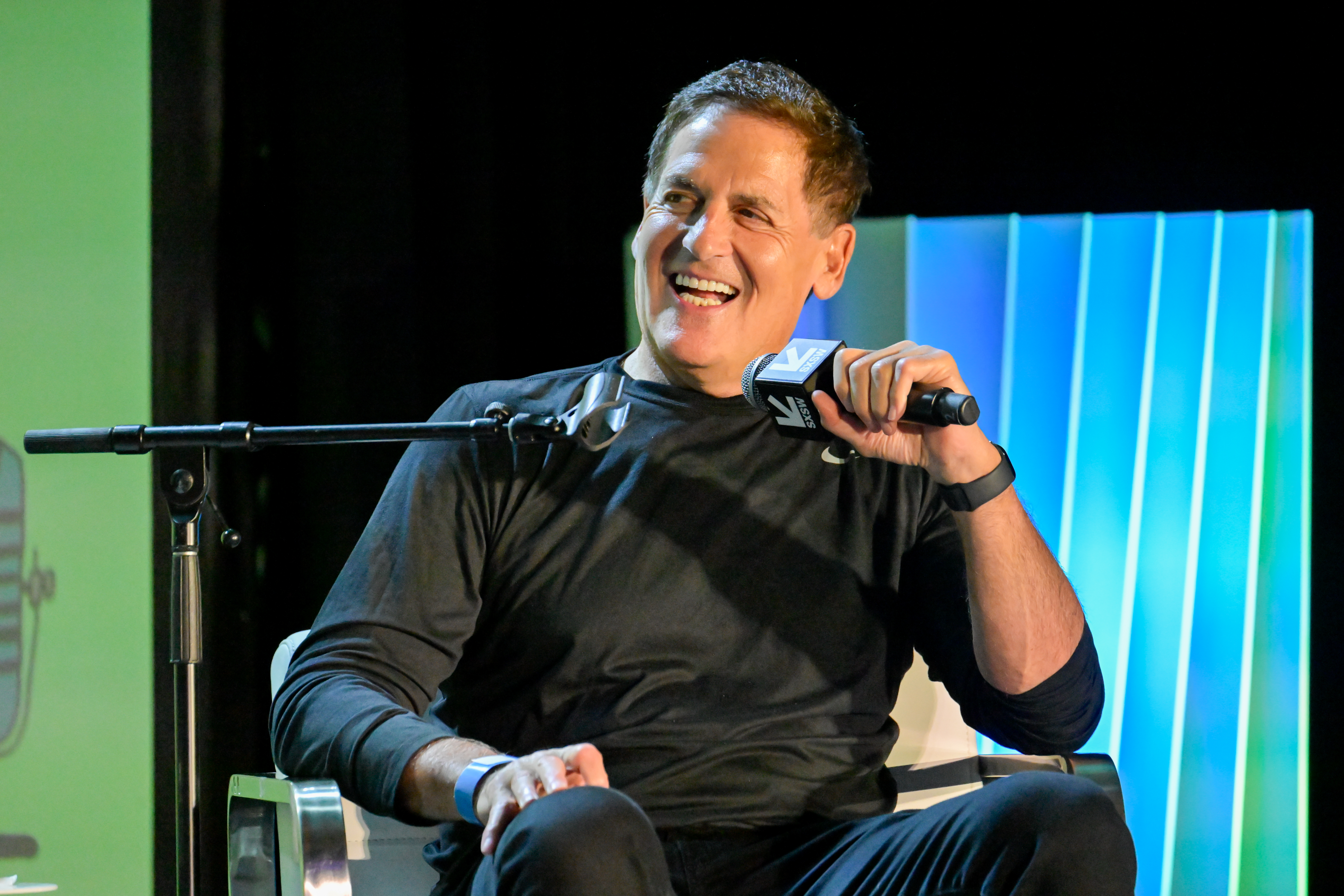
Mark Cuban once believed he was an approachable boss. But one blunt conversation with his cofounder forced him to rethink how he ran his companies.
“People are afraid of you,” Cuban recalled his Broadcast.com business partner Todd Wagner telling him years ago. “We don’t get as much done because people are afraid of you.”
Speaking on the Trailblazers Podcast last month, the billionaire entrepreneur and Shark Tank star, who celebrated his 68th birthday on Friday, explained how his leadership approach has evolved over time.
“I thought I was nice, I got along with everybody,” Cuban explained, saying at the time, he built his leadership style around the “dominant” CEO stereotypes he grew up with. “It turns out my perception was different. Adapting there and learning to be nice and kind to people made life a lot easier for me.”
The shift wasn’t just personal—it had operational consequences. Cuban said that when employees are intimidated, collaboration slows and talent walks, and it was his “biggest professional challenge.”
“If people don’t want to work with you or for you, that’s a problem,” Cuban said. “You lose good talent.”
Cuban’s leadership ventures
In 1995, Cuban and Wagner founded Broadcast.com, the streaming and audio company that Yahoo acquired in 1999 in a $5.7 billion stock deal, officially placing the founders on the map as billionaires of the dot-com boom.
They went on to launch 2929 Entertainment in 2003 as an entertainment development and production firm that produced more than 20 films for theatrical and direct-to-DVD release.
In 2000, Cuban became the principal owner of the NBA Dallas Mavericks after he purchased the team for $285 million from H. Ross Perot Jr. Two decades later, Cuban sold the majority of his stake in the team for $3.5 billion due to the financial pressure of maintaining the team—a testament to the advice he offered on the Trailblazers Podcast.
“You can learn to improve at pretty much anything,” said Cuban. “If you suck at it, you take a step back and you find something else.”
A larger trend in workplace dynamics
While Cuban rethought his approach, many workers are still grappling with bosses whose behavior spills into their mental health, finances, and family life.
Research from the Harris Poll published earlier this year found that 34% of workers say their boss gives an impression of being unapproachable, and 66% of those with a toxic boss say they’ve worked a weekend, holiday, or day off because of their boss. Overall, 47% of workers report increased stress, burnout, or a decline in mental health tied to a toxic boss—with Gen Z workers reporting somewhat less of that at 44%. And 53% of workers with a toxic boss say they’ve attended therapy to discuss it, compared with 39% of all workers.
Cuban acknowledged that his own habits contributed to the issue. Early in his career, he would often work late into the night until 2 a.m. and wondered why others didn’t.
“I had no work-life balance and I didn’t expect anybody else to have it either,” Cuban said.
Recently, Cuban has applied that same scrutiny to pay practices, calling low wages “embarrassing” for profitable companies and urging employers to raise hourly rates
“When I heard people who worked for a company I invested in (but didn’t run) needed government assistance, I made sure they all got raises,” Cuban wrote in a June post on X.