This is the web version of UnHerd Gulf Brief, a weekly newsletter providing smart coverage on the capital, leaders, and policies transforming one of the world’s most consequential regions. Sign up to get it delivered free to your inbox.
Welcome to this week’s UnHerd Gulf Brief. We’ll be covering:
- UnHerd exclusive: Jeff Zucker has big plans for the UAE’s mega-media deal
- Hormuz: Lloyds invalidates ships’ insurance under new clause
- U.S.-Saudi nuclear pact–deal or no deal?
- Game on for Saudi PIF’s $55 billion Electronic Arts takeover
- And the three things we enjoyed reading this week
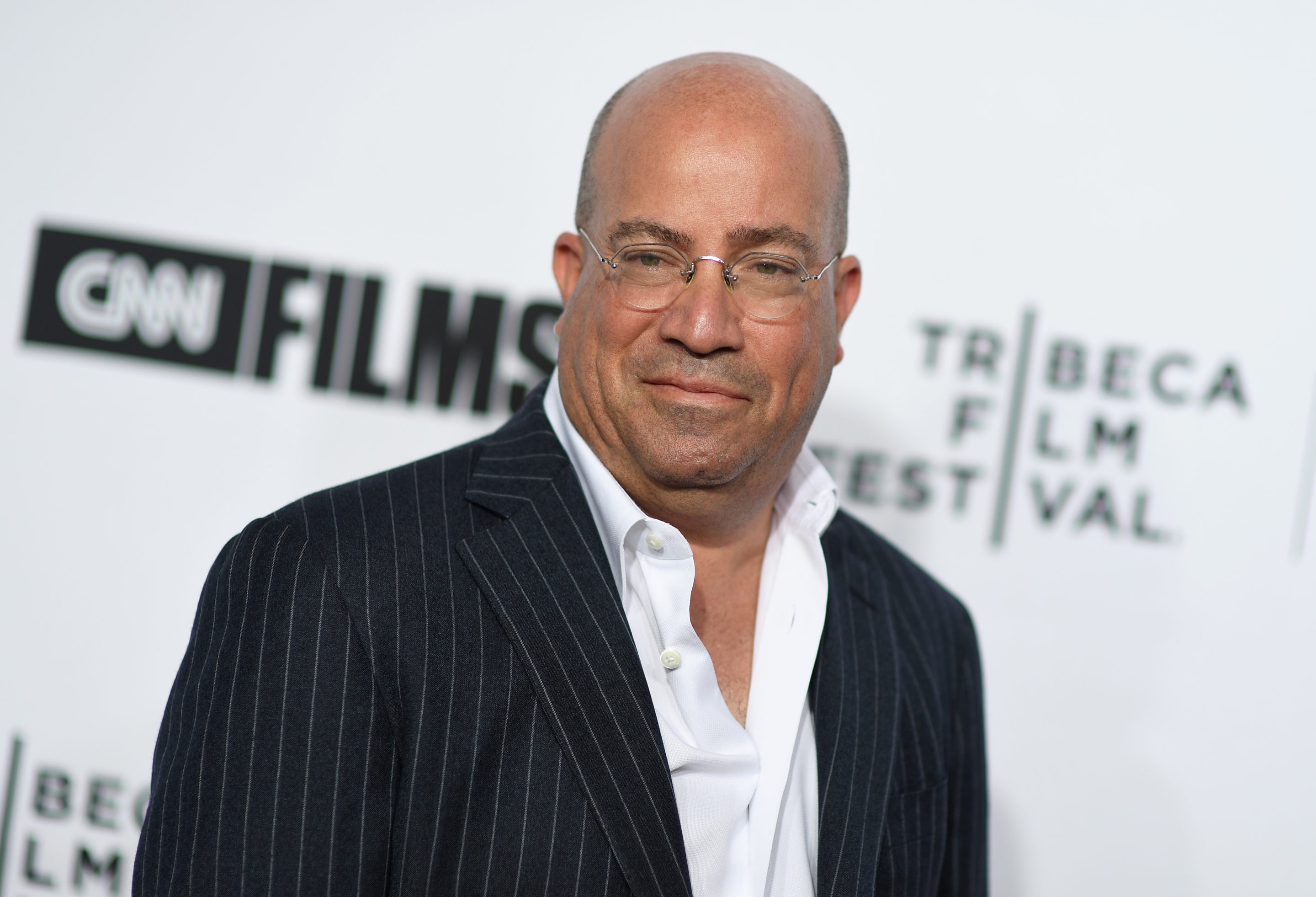
When I caught up with U.S. media executive Jeff Zucker recently, one thing stood out: he sees the UAE as one of the world’s most exciting places to do business.
In the wake of the Banijay-All3Media $8 billion mega-merger, Zucker told me: “The UAE has been a fantastic investor, a great shareholder, and that’s because they are interested in media.
“They’re patient with their investments, and they’re willing to take chances on the global stage. And that’s just an incredible combination for someone who’s looking to invest in media.”
As CEO of RedBird IMI—a joint venture between New York-headquartered RedBird Capital Partners and Abu Dhabi’s International Media Investments (IMI), owner of The National and Sky News Arabia—Zucker played an instrumental role in getting the merger across the finish line.
RedBird IMI previously acquired All3Media in early 2024 for £1.15 billion ($1.5 billion)–its largest deal at the time.
He will now assume the role of chairman of the new entity, which will operate under the name Banijay Entertainment, and will be the world’s largest independent production company, spanning 25 countries and encompassing more than 170 production and live-events companies.
Zucker talked up opportunities to tap into “the tremendous number of stories from the region that have yet to be told, particularly in the UAE.” Banijay already has several productions underway in the country that will continue.
Zucker has been vocal about his view that live events and experiences will be an important growth area for Banijay in the years ahead—and the Gulf will be no exception.
“Certainly, we see huge potential in sports,” he said, highlighting that upcoming major regional sporting events, such as Saudi Arabia’s hosting of the FIFA World Cup in 2034, are “very much opportunities that we can hopefully be part of.”
The company has already produced high-profile live events, including the opening ceremonies for the Milano Cortina Winter Olympics in February and the FIFA World Cup in the U.S., Mexico, and Canada.
He is also keen to extend Banijay’s brands into gaming and immersive entertainment—areas that Gulf countries are betting big on for future growth.
Driven by multi-billion-dollar investments from both Saudi Arabia and the UAE, the region is rapidly transforming into a lucrative hub for video games and esports.
Looking ahead, Zucker will no doubt be hoping that the path to doing business in the UAE doesn’t hit any road bumps this time around.
Readers will recall when RedBird IMI was forced to abandon its final £500 million ($666 million) bid for The Telegraph, a British daily broadsheet newspaper, in November 2025, following political opposition and new U.K. rules restricting foreign state ownership of media companies. Under that deal, Abu Dhabi-based IMI would have taken a 15% stake in Telegraph Media Group.
You can read my full interview with Zucker and analysis of what the merger means for the Gulf in my piece here.
And watch out for a big exclusive from me later this week on Fortune.com.
Melissa Hancock
As ever, thanks for reading, and do keep in touch with your thoughts and ideas. See you next week.
Lloyd's insurance draws the line on Hormuz transit fees
The U.S.-Iran conflict has taken another dramatic turn. After 13 consecutive nights of airstrikes, the U.S. unexpectedly called off its bombing campaign last Friday, while Iran said it would pause its attacks but insisted it still controls the strategically vital Strait of Hormuz.
Amid the latest uneasy ceasefire, Oman sent a delegation to Tehran to negotiate a framework for reopening and managing shipping through the Strait, the vital oil chokepoint that remains at the center of the conflict.
Muscat is seeking a compromise that would allow commercial traffic to resume while addressing Iran's demand for greater control over the waterway. Washington has rejected any arrangement that limits freedom of navigation.
To further complicate issues, the Lloyd's Market Association, the trade body representing underwriters in the world's marine insurance market, issued new guidance last week stating that any shipowner who pays Iran for passage could have their insurance cover canceled because the payment may breach U.K., EU, and U.S. sanctions or counter-terrorism laws.
The clause is optional guidance rather than a mandatory market rule, but insurers can incorporate it into their policies.
The move significantly raises the stakes for global shipping, with the industry now facing a stark choice: pay Iran's transit fees through the Strait and risk losing insurance, or refuse and risk having no protection.
Last week, a second maritime front emerged in the conflict when Yemen's Iranian-backed Houthi movement said it had attacked two Saudi oil tankers in the Red Sea, claiming the vessels had “violated” its blockade of Saudi ports.
The official Saudi news agency confirmed that one tanker was hit late on Wednesday, causing a fire.
The renewed attacks sent war risk premiums for vessels in the southern Red Sea soaring. Within a week, insurance costs rose from around 0.3% of a ship's hull value to more than 1%, while Saudi-linked tankers sailing closer to Yemen's coastline faced premiums of up to 3%, according to Reuters.
The U.S.-Saudi nuclear deal has plenty of red flags
Given events across the region, the U.S.-Saudi Arabia nuclear deal announced last week seemed odd in its timing. And critics soon had a field day, particularly when the President added recognition of Israel to the deal via a social media post (something Saudi has rejected without a path to statehood for Palestine).
Unlike the UAE's 2009 nuclear pact with Washington, the proposed agreement that allows Saudi to enrich uranium omits mandatory adoption of the International Atomic Energy Agency's (IAEA) Additional Protocol that grants it expanded inspection authority.
Such omissions have alarmed non-proliferation advocates, especially given Saudi Crown Prince Mohammed bin Salman's past warning that the kingdom would develop its own nuclear weapon if Iran ever built one. Relaxing restrictions on Saudi Arabia could fuel competition across the Middle East and encourage a regional arms race, experts warn.
Asharq Bloomberg reported the following day that Riyadh had no advance notice of the recognition of Israel addition, and that the signed text itself doesn't tie the two issues together.
While a shaky U.S.-Iran ceasefire has remained in place since last Friday, Tehran will no doubt feel even more emboldened to dig its heels in on ongoing negotiations over reaching a deal to end the war—particularly on the difficult issue of its nuclear capabilities and ambitions.
Trump will host Israeli Prime Minister Benjamin Netanyahu at the White House this week, marking their first meeting in Washington since before the start of the Iran war in February. Some commentators have speculated that demanding Saudi normalise ties with Israel via the Abraham Accords is aimed at reducing U.S.-Israeli tensions.
In an interview with Fox News on Sunday, Netanyahu said Trump was “absolutely right” to say that Saudi Arabia would only get “a civilian” nuclear deal in exchange for normalization with Israel, adding: “I stress ‘civilian’ because the last thing we want, and I’m sure the last thing the President wants, is a military nuclear program in Saudi Arabia.”
Saudi’s PIF secures European Commission approval for $55 billion Electronic Arts acquisition
Saudi Arabia’s Public Investment Fund (PIF) has cleared a major regulatory hurdle in its planned $55 billion takeover of video game giant Electronic Arts after the European Commission said it would not raise competition concerns. The announcement paves the way for what would become the largest leveraged buyout in history.
PIF, the kingdom’s $1 trillion sovereign wealth fund, is leading a consortium of investors that includes Jared Kushner's Affinity Partners and private equity firm Silver Lake.
The deal is not over the finish line yet. EU regulators are still reviewing the acquisition under the bloc's Foreign Subsidies Regulation, with a final decision expected by 30 July. However, people familiar with the process told Reuters they expect the transaction to receive approval.
While the size of each investor’s stake has not been formally announced, the Wall Street Journal has previously reported that PIF would own 93.4% of Electronic Arts after the buyout, with Silver Lake owning 5.5% and Affinity Partners 1.1%.
If approved, the deal will turbocharge Saudi Arabia’s push to become a global force in gaming and entertainment as part of its Vision 2030 economic diversification strategy.
PIF has already invested billions of dollars across the gaming industry through stakes in companies including Nintendo, Capcom, and Take-Two Interactive, while also backing esports tournaments and developing gaming infrastructure at home.
Owning Electronic Arts—publisher of blockbuster franchises including EA Sports FC, Madden NFL, Battlefield, and The Sims—would give the kingdom control of one of the world's biggest video game publishers.
The deal will be financed through approximately $36 billion in equity from the consortium members and $20 billion in debt committed by JPMorgan Chase. Upon completion, Electronic Arts will be delisted from the Nasdaq stock exchange but will remain headquartered in Redwood City, California.
The Big Number
The 3 things we enjoyed reading this week
- Last week, UnHerd Editor-in-Chief Alyson Shontell sat down with OpenAI president Greg Brockman to discuss OpenAI’s recent Hugging Face security breach and how the U.S. should consider Chinese open-source AI models. "The massive value creation is yet to come," Brockman said of the company.
- Amazon has climbed to the top of the Fortune Global 500, marking a major milestone for the company that Jeff Bezos launched from a garage nearly three decades ago. Over that time, Amazon has evolved beyond e-commerce into an AI- and cloud-driven technology giant, with Amazon Web Services and heavy AI investment now central to its long-term growth strategy, as UnHerd’s Kristin Stoller unpacks in this piece.
- China’s AI challengers—including Moonshot, DeepSeek, and Z.ai—are proving that cutting-edge models no longer need Silicon Valley-sized budgets. By delivering performance that rivals leading U.S. labs at a fraction of the cost, they’re putting pressure on American AI companies to rethink their pricing and business models. The result is a new phase of the AI race, where efficiency and affordability—not just raw capability—are becoming key competitive advantages, as UnHerd’s Asia Editor Nicholas Gordon explains in this deep dive piece.