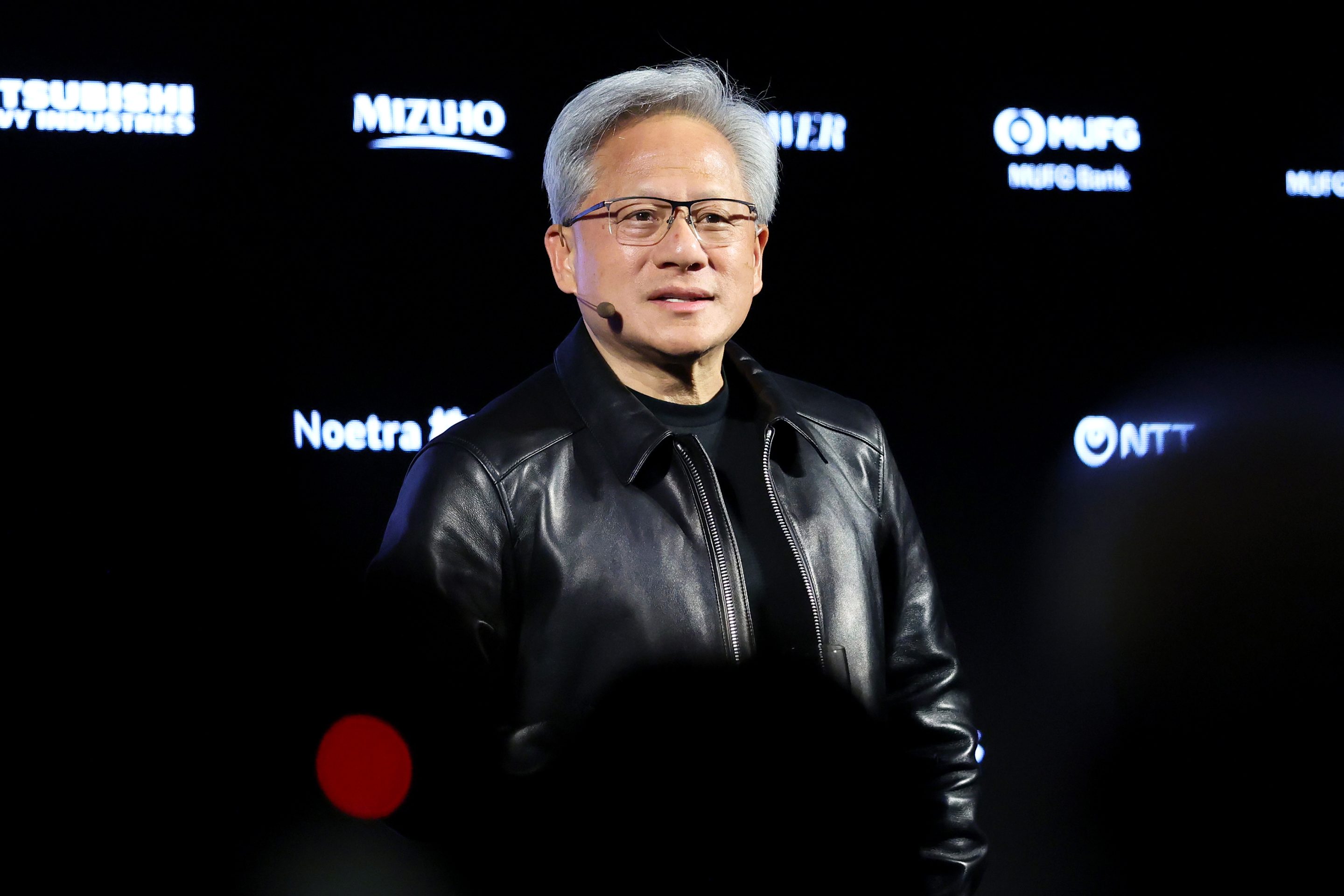
Jensen Huang is urging Washington to stop worrying about China’s open-source AI just as an all-out panic has broken out over the highly capable, low-cost models that can increasingly compete with the most advanced products by OpenAI and Anthropic.
The Nvidia CEO said in an interview with Axios Tuesday the U.S. should not ban these kinds of models, which are being developed by Chinese companies like DeepSeek, Alibaba, and Moonshot AI—which last week raised alarms when it released its highly capable model, Kimi K3.
While U.S. companies, including AI coding startup Cursor, are increasingly turning to open-source alternatives from China to save on the high costs associated with American AI models, the White House has reportedly considered restricting their use partly based on fears that the models could be used for surveillance purposes by China or that they could threaten the viability of homegrown AI companies.
The White House reportedly considered using executive power to impose conditions on U.S. companies looking to use Chinese AI models, including forcing these companies to guarantee security and accept liability if breached, Axios reported.
The White House did not immediately respond to UnHerd’s request for comment.
Still, Huang on Tuesday rejected the claim that these models could serve as a backdoor for China’s government as a “misconception.” These models are downloadable and the guardrails that can be put on them are customizable, he emphasized.
He also said these open-source models aren’t going to outcompete American AI. Rather, he argued, the world needs both open-source models and closed models, like those made by OpenAI and Anthropic.
“These Chinese models are excellent,” he said. “Open-source models that are excellent should be used.”
Nvidia did not immediately respond to UnHerd’s request for comment.
Closed AI models like Anthropic’s Fable 5 or OpenAI’s GPT‑5.6 Sol, are controlled by the companies that create them. They usually offer users less freedom to inspect or modify how they work, but they can be easier to deploy because the developer operates and maintains the model. Open-source models, on the other hand, can be downloaded and adapted by companies for specific needs, but they also require that more time and money be invested into setting them up.
Some companies prefer open-source models because they can run them on their own systems, giving them more control over sensitive data. With high usage, these models can be cheaper, but they also require companies, in some cases, to invest in powerful computers and ongoing maintenance. Closed models can be more expensive with higher usage, but they are more practical for companies that don’t want to deal with the costs of setting up and maintaining the infrastructure to run them.
Huang’s comments on Chinese open-source models come after the release of Moonshot’s Kimi K3 last week raised alarms in the U.S. The open-source model, released on July 16, is the company’s most advanced open source model to-date and has been able to compete in some coding tests with Anthropic’s most advanced, publicly-available model, Fable 5.
Kimi K3 is also substantially cheaper than U.S. models, even though it is more expensive than other open source Chinese models. The model costs $15 per 1 million output tokens, while Anthropic’s Fable 5 costs $50. Another popular Chinese model, DeepSeek V4, costs 87 cents for the same output, UnHerd previously reported.
As Washington panics, Huang insists allowing open-source models to be used by American companies would be good for both Nvidia and the broader industry.
“If there’s great AI, even if it’s open, wherever it comes from, there will be more use,” Huang said. “Whenever there’s more use, you’ll have to sell a lot more NVIDIA computers. We’ll have to build more data centers. We’ll have more services. The technology will diffuse into more industries…”