Economies like South Korea, Japan, and Taiwan are cementing their position as the hardware engines behind the AI boom. Southeast Asia, on the other hand, is playing catch-up.
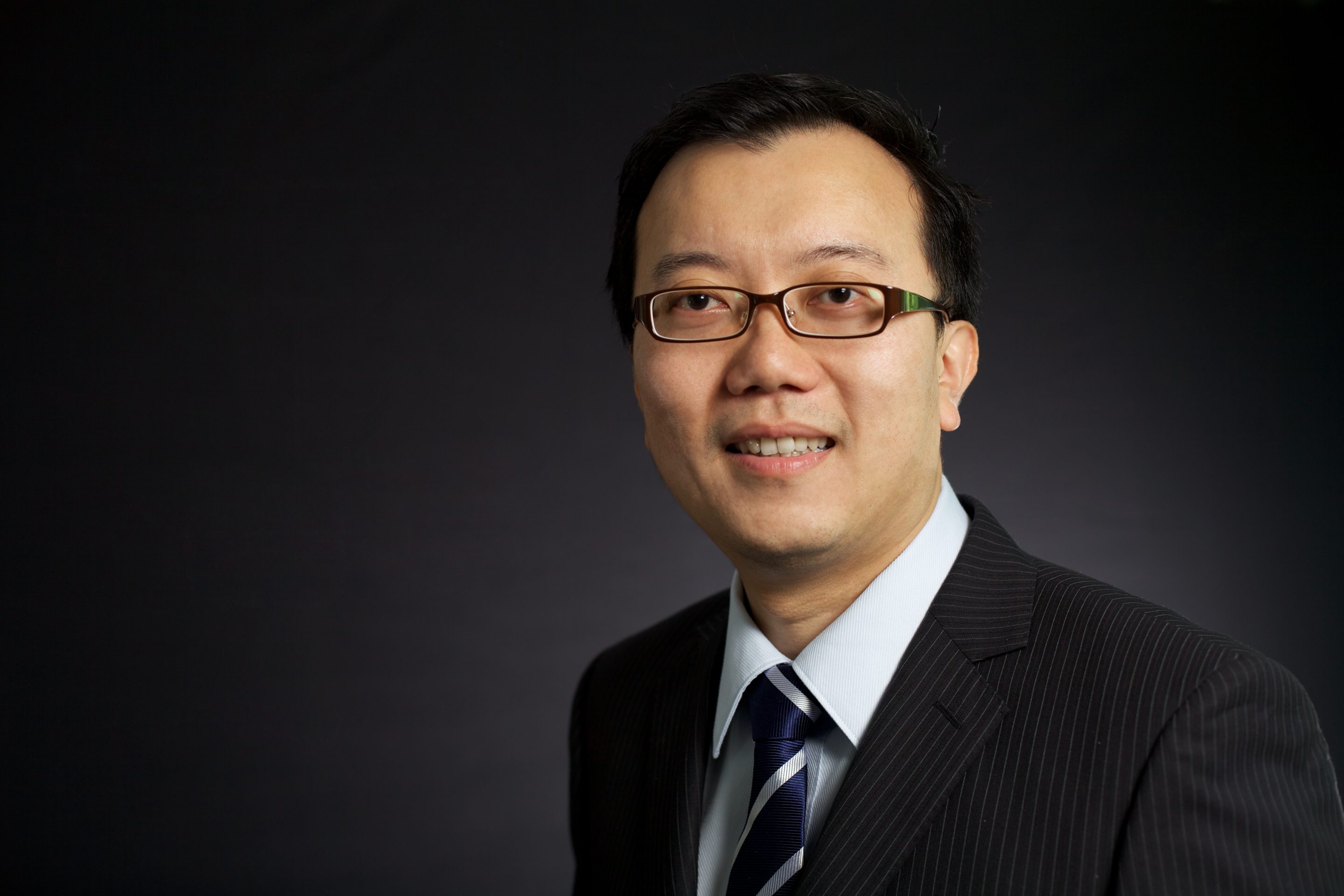
“Despite all the talk about FDI, Southeast Asia has not really moved up the value chain,” Edward Lee, Standard Chartered’s chief economist and head of FX for ASEAN and South Asia, tells UnHerd. Southeast Asia contributes just 6% of global intermediate manufacturing, compared with 15% for China.
Surging demand for AI processors, and the components that go into them, is creating a windfall for companies in the AI supply chain, like Taiwan Semiconductor Manufacturing Company (TSMC), Samsung Electronics, and SK Hynix. On July 16, TSMC reported 707 billion New Taiwan dollars ($22 billion) in quarterly profit, a 77% jump year-on-year and significantly beating analyst expectations.
Southeast Asia is present in the AI supply chain: Singapore produces semiconductors, while Malaysia is involved in chip assembly, packaging, and testing. Both Malaysia and Thailand also help assemble AI servers. Even so, the AI sector in Southeast Asia is significantly smaller than in North Asia, home to the leading semiconductor companies, AI server assemblers, and decive component manufacturers.
Lee argues that Southeast Asian companies and governments will need to invest in AI-related research and development in order to guard against irrelevance. The Singapore government, for example, has committed over 1 billion Singapore dollars ($776 million) to fund research on fundamental AI and applied research. “But R&D is costly,” Lee admits.
He cautions against generalizing how AI will affect the region. In his view, Singapore, Malaysia, and Vietnam will likely benefit from increased demand for electronics manufacturing.
He’s less sure about the Philippines, as AI could threaten the country’s business process outsourcing (BPO) industry, which contributes 8% of GDP.
On July 14, the IT & Business Process Association of the Philippines, a group that represents the sector, downgraded its best-case scenarios for 2028 revenue and headcount to $50.5 billion and 2.14 million jobs, down from $59 billion and 2.5 million jobs, respectively. (According to the group, the industry generated $40.3 billion in revenue and employed 1.89 million people last year).
“Every country wants to have the next Silicon Valley or be the next AI mega-producer, but getting there isn’t just a matter of snapping one’s fingers or throwing money towards the industry—that may not work,” Lee says. “Unfortunately, I don’t have a silver bullet solution.”
Lowering global growth forecasts
On Wednesday, Standard Chartered’s research team lowered its global growth forecast for 2026 from 3.4% to 3.0%, pointing to “conflict-induced downgrades in the Middle East”. Still, the bank’s economists believe that conflict risks have now peaked, and global growth will continue at a “stable trot” for the rest of 2026.
“That downgrade to our global growth forecast is largely a reflection of what has already happened,” said Eric Robertsen, Standard Chartered’s chief strategist and global head of research, during a press briefing on July 15, though he foresaw some continued “economic scarring” from the Middle East conflict stretching into the second half of the year.
One possible form of “scarring” is damage to supply chains. “Some oil, natural gas and other commodities are starting to leave the Strait of Hormuz, but we have come nowhere close to normalizing… so the economies that are heavily dependent on oil, natural gas, petrochemicals and fertilizer are still facing the strains of the supply shock,” Robertsen said.
Transit through the Strait of Hormuz has been largely blocked throughout the Iran war. In recent days, a breakdown in the Iran-U.S. ceasefire has led to renewed attacks on ships from Iranian forces and a revived U.S. blockade of Iranian shipping.
Several Asian economies could still be dragged down by an energy crisis caused by the Iran war. “The currencies which I think will perform a little bit worse are largely going to be net commodity importers like India, the Philippines and Thailand,” Divya Devesh, Standard Chartered’s co-head of FX research for ASEAN and South Asia, added during the bank’s July 15 press briefing. “If you overlay that with a stronger dollar as well, you can expect some underperformance in those places.”
Lee thinks geopolitics is changing how global businesses approach their supply chains. “Geopolitical risk is now very real,” he concludes. “I grew up in an age when it was just pure economics: If you could produce better and cheaper, you got the orders.”
“But now, people are more concerned with how you produce, and attach a higher premium to geopolitics.”