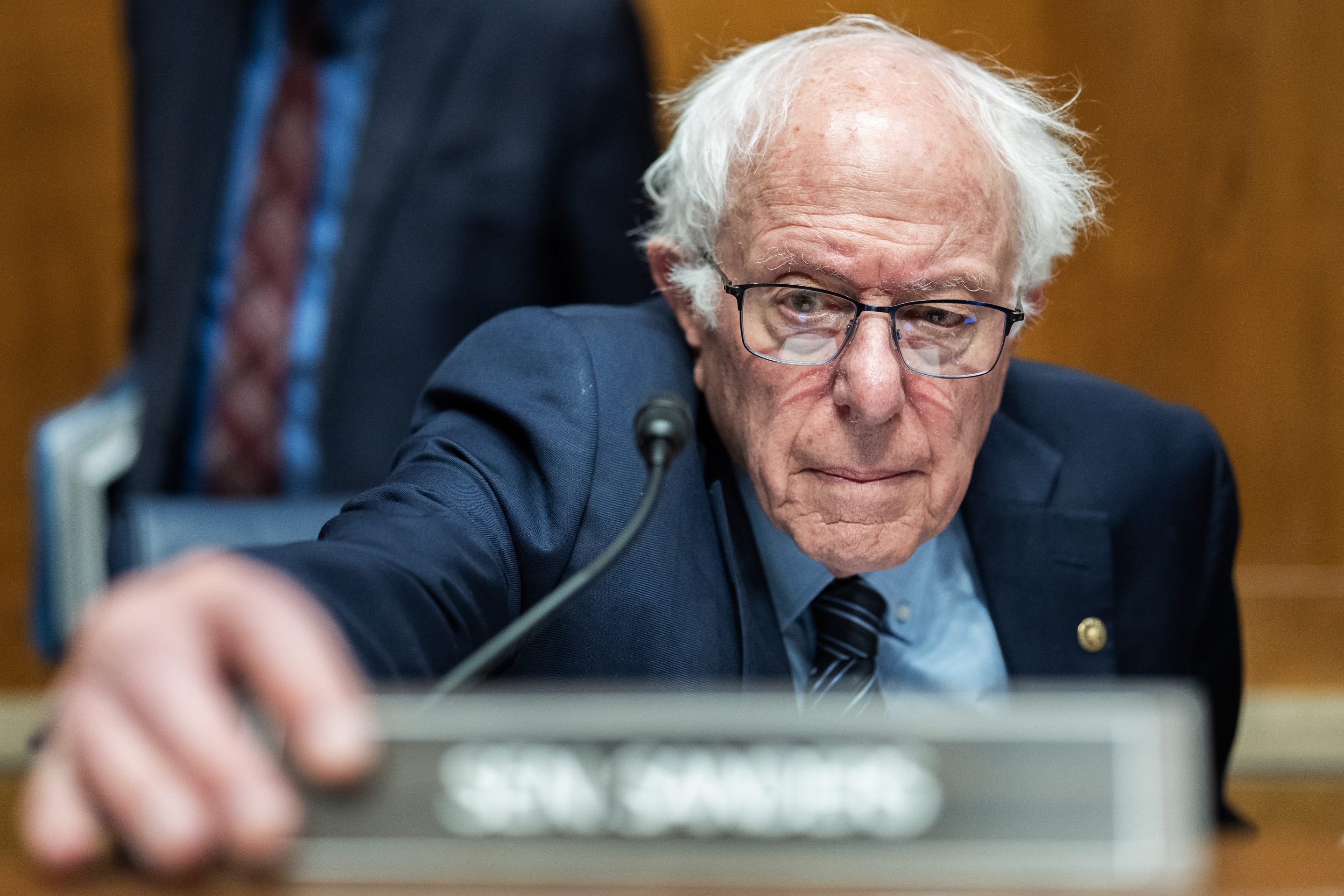
The meeting wasn’t supposed to go this long. I had traveled to Burlington not to talk Bernie Sanders into running for President, but to tell him how little chance he had to win.
It wasn’t that I didn’t believe in him — I’d known and worked for him for years — but I believed, hard and honestly, that he would almost certainly lose. I told him the old essays would surface, the stupid and inappropriate meditations on women and sex published in a Vermont alternative weekly in the early 1970s. I told him that the full financial and organizational heft of the Clinton campaign would be focused on destroying him, and that Hilary was going to have almost all the 800 superdelegates. I told him that the things he loathed — the relentless schedule, the Secret Service detail, the loss of any privacy or spontaneity — would become his daily existence. Why would you want to do this, I asked, when it’s going to so upset your life, and you will almost certainly lose?
Bernie debated me point by point. The conversation grew more intense. His answers were good — practiced, even — but I couldn’t shake the feeling that they were rationalizations rather than reasons. They explained the campaign he was constructing, not the fire driving him toward it.
I had spent decades in presidential politics, working as a strategist for Al Gore and John Kerry in their nomination-winning campaigns. I knew the difference between a candidate who had calculated that he should run and a candidate who had no real choice. After about an hour, I pushed him harder. I need you to tell me exactly what you’re thinking, I said. What really matters here? What’s really going on? Bernie looked me dead in the eye. Then, in typical Bernie fashion, he finally said it: I’m sick and tired of being a fucking backbencher.
That statement had the ring of truth. He had turned 73 years old the previous September. He had been working on issues like healthcare and income inequality with passion and commitment for nearly half a century. If he didn’t move the conversation to the next level — to a level it could never achieve in the sedate halls of the Senate — any legacy he hoped to leave for Vermont and the American people would be lost. He needed more people to understand that someone in politics heard them, cared for them, wanted their lives to be better, and believed that the government’s job, first and foremost, was to make their lives better.
There are moments in politics, as in life, when you suddenly see all the disparate parts come together in a coherent whole. Once he said that, I understood what was at the heart of the campaign. It was about him getting a chance to talk about all these issues — which he’d spent decades fighting for — on a national stage. He believed the country needed to move forward urgently on healthcare, climate change, a living wage for working people, equality for all, affordable education, the expansion of Social Security. He wanted every American to hear about his issues and agenda, and that could only happen if he ran a campaign strong enough to go the distance in every single primary and caucus in the nation.
I’ve thought about that moment many times in the 10 years since, and never more than now. The same pattern that dismissed Bernie Sanders — the horror, the obstruction, the rules designed to protect insiders — has been repeated against Alexandria Ocasio-Cortez, and more recently against New York City Mayor Zohran Mamdani. Each time, the Democratic establishment responds to a candidate who actually connects with voters by marshaling the institutional machinery against them.
The establishment’s theory of the case has always been that popular insurgents are too risky, too unpolished, too outside the lane. What they never ask is: risky compared to what?
I let Bernie’s words hang in the air for a moment. Then I took a deep breath and said: Okay. I get it. If that’s what this campaign is about, I think you can win it. I think people are ready to hear from someone who is focused on their economic future and wants to give them a way to deal with an economy that works for so few against the interests of so many.
When my delayed plane finally took off for home, I sat back in my seat and realized that despite everything, this campaign had it all: a candidate with sui generis authenticity, one whose message of hope and celebration of working people and the middle class could tap into voters’ most fundamental emotions. I had no earthly idea where it would all end up. But I was all in.
Adapted from How the Democrats Screwed Bernie by Tad Devine (Simon & Schuster, July 2026).