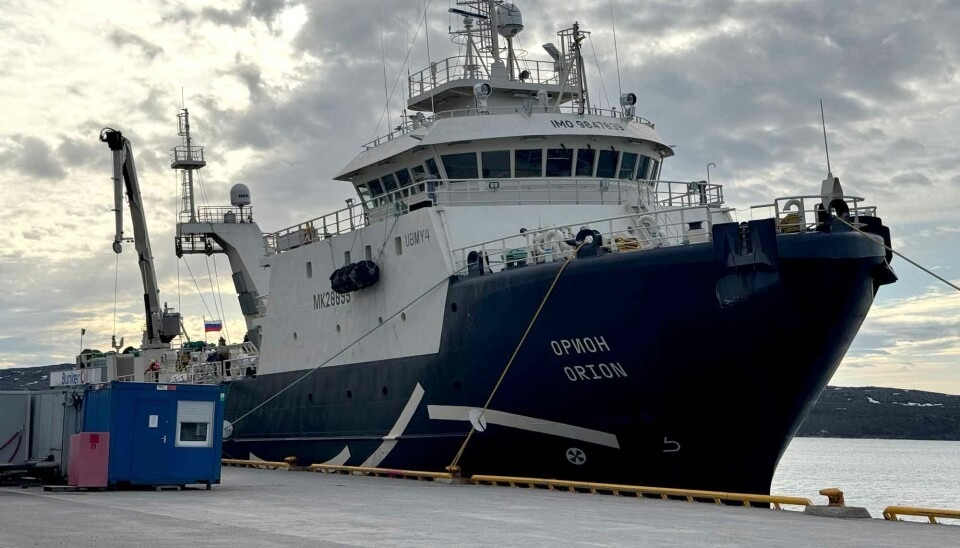
A little-known Russian company behind a fleet of spy ships threatening critical western infrastructure is facing European Union sanctions as the bloc intensifies pressure on President Putin's maritime network.
The EU is reportedly reviewing an explosive dossier that identifies PKB Petrobalt as a central player in the design and construction of dozens of vessels disguised as fishing boats but built for surveillance in the west.
According to experts, Russia has amassed a secretive armada, dubbed the shadow fleet, to engage in spying in European waters. The boats, disguised as fishing trawlers or scientific research vessels, are armed with underwater surveillance apparatus that can be used to map crucial sites of interest viewed by Moscow as potential sabotage targets. Authorities have grown increasingly concerned over the threat of sabotage from Russian ships operating near subsea cables, pipelines and other critical infrastructure.
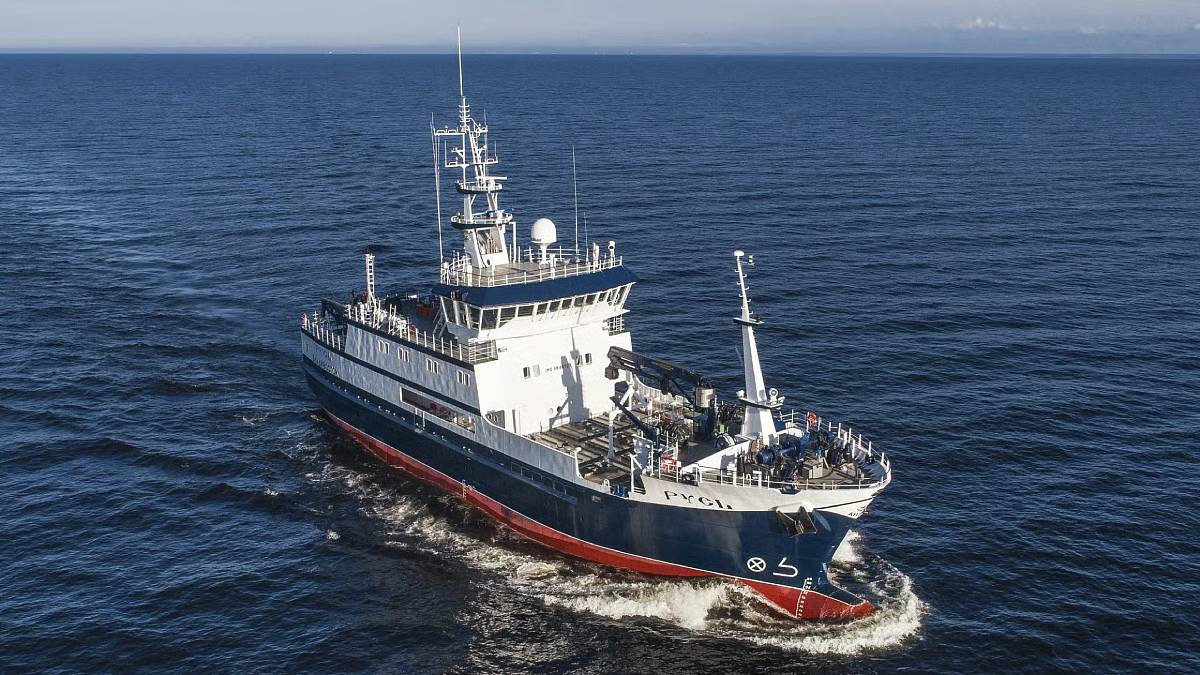
Although EU authorities have identified several such vessels, the company behind many of their designs has largely escaped scrutiny. Founded in Saint Petersburg in 1995, Petrobalt specialises in ice-class ships, fishing trawlers, patrol vessels and Arctic-capable commercial craft. Unlike the major state shipyards that construct vessels, Petrobalt produces the designs, engineering documentation and technical specifications from which ships are built, a more obscure role that appears to have helped it avoid scrutiny.
Since 2022, Petrobalt has undertaken projects involving United Shipbuilding Corporation, Russia's dominant state-owned shipbuilding conglomerate, as well as a series of sanctioned subsidiaries and affiliated organisations including Malakhit, Lazurit, Almaz and Severnoye PKB.
The company has also entered into cooperation agreements with Ascon, a Russian engineering software provider sanctioned by both the United States and the European Union, and has continued working on projects involving EKO Shipping, a company associated with Russia's Arctic transport infrastructure and sanctioned by the United Kingdom and the United States.
In September 2025, the Mekhanik Stepanov, a Russian fishing vessel designed by Petrobalt, drifted near critical infrastructure in the Danish Straits having supposedly suffered an engine failure near the southern entrance to the Øresund, one of northern Europe's busiest maritime corridors. Swedish coastguard units, Danish naval assets and a NATO vessel monitored the ship as it drifted near strategic energy infrastructure.
It subsequently emerged that the Mekhanik Stepanov was owned by interests connected to Norebo, one of Russia's largest fishing groups that at the time of the incident was under intense scrutiny from European authorities over alleged surveillance activity involving Russian fishing vessels in northern waters. Less attention, however, was paid to Petrobalt.
Petrobalt has long enjoyed a close relationship with the Russian government. The company designed the Project 22120 Purga-class patrol vessels operated by the FSB. These ice-strengthened ships are deployed along the Northern Sea Route and in Russia's Far Eastern waters, where they perform border patrol, fisheries enforcement, search-and-rescue and maritime security functions.
In addition to FSB patrol vessels, the company has worked on projects linked to Arctic logistics operators, Gazprom-related shipping programmes and vessels supporting northern transport corridors. While many of these ships are formally civilian, the distinction between commercial and strategic infrastructure has become increasingly blurred.
Petrobalt has also designed vessels that later became associated with Russia's wider maritime surveillance ecosystem. Murman Seafood, a Russian fishing company like Norebo and sanctioned by the European Union in 2025 over alleged involvement in surveillance activities, operates vessels designed by Petrobalt.
In March 2022, shortly after Russia launched its full-scale invasion of Ukraine, a 15 per cent stake in the company was acquired by Alliance Group, a Moscow-based consulting and project-management firm controlled by businessman Vitaly Keondzhyan. The investment brought Petrobalt into a wider network of companies operating across aviation, shipbuilding, industrial technology and international project development.
Alliance Group has spent decades working around some of Russia's most strategically important industries. Like Petrobalt, Alliance has typically operated as a facilitator, bringing together financing structures, international partners, project vehicles and technical programmes.
Its most significant aerospace involvement was the Sukhoi Superjet programme, Russia's flagship civilian aircraft project, where Keondzhyan served on the board of Sukhoi Civil Aircraft and Alliance helped manage international partnerships. After sanctions disrupted the programme's reliance on Western components, Alliance publicly backed plans to relocate elements of Superjet production to the United Arab Emirates while supporting efforts to localise manufacturing.
The company was also involved in the AW139 and VRT-500 helicopter programmes, helping structure cooperation between Russian and Italian partners, and has held contracts with Russian state research and industrial institutions including organisations tied to aviation, shipbuilding and nuclear research.
Keondzhyan has controlled the company for decades and remains its central figure. Alongside him, Vladimir Zotov has served as deputy director since 2006, becoming one of the most senior figures within the Alliance Group ecosystem. Their business relationship extends beyond Alliance Group itself and into a network of companies spread across Russia, Serbia, Montenegro and Cyprus.