Good morning.
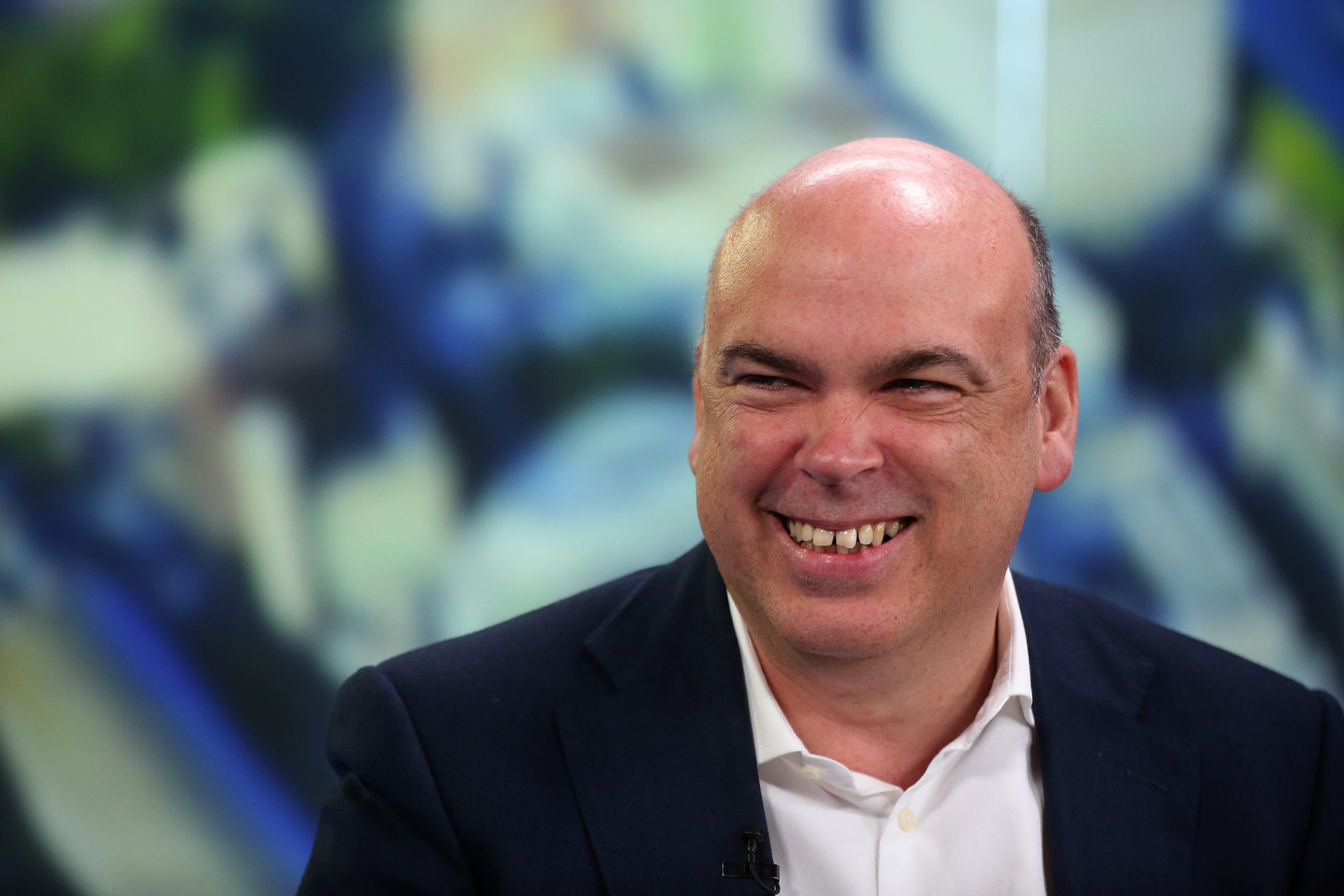
In late 2012, I got a call from an advisor to Autonomy cofounder Mike Lynch, who had sold his U.K. software company to HP for $11.7 billion a year earlier and now found himself fired and accused of fraud. Lynch was eager to prove his innocence, of course, and spoke with me at length about his business model and accounting methods. Lynch died on Monday when his yacht sank off Sicily, just weeks after emerging triumphant from his 12-year battle to be cleared of a crime.
I never did become an expert in the “Bayesian inference” method or the adaptive pattern recognition at the heart of his pioneering analytics software. But I knew that you shouldn’t book sales of low-margin hardware as high-margin software or future sales as current revenue, which were among the allegations against him and co-defendant Stephen Chamberlain, who also died this week after being hit by a car while jogging.
Much has been written about Lynch, but it’s also worth considering the circumstances in which Autonomy the acquisition and subsequent charges occurred. In 2011, HP was struggling in a stagnant U.S. economy while Cambridge-based Autonomy was a relative bright spot in a Britain that was mired in debt and economic malaise.
On the East Coast, Americans were still dealing with fallout from the 2008 financial crisis, a greed- and leverage-fueled blowup that eroded trust and wealth for years to come.
Over on the West Coast, Hewlett-Packard Co.—a brand so iconic that the garage in which it was founded is dubbed the “Birthplace of ‘Silicon Valley’”—had become a beacon for bad decision-making. It had bought handset-maker Palm for $1.8 billion in 2010, only to shut it down in 2011. It had just taken an $8 billion “accounting charge” (a.k.a. writedown) on its $13.9 billion acquisition of Electronic Data Systems. And there had been a revolving door of CEOs, from Mark Hurd, who resigned over an ethics scandal in 2010, to Leo Apotheker, who lasted less than a year, and then Meg Whitman.
Against this backdrop, HP’s pricey acquisition of Autonomy and subsequent $8.8 billion writedown a year later looked less like a shocking dupe than par for the course. And Britain’s homegrown hero could credibly claim to be a tempting scapegoat in another HP deal gone bad. (Lynch didn’t disagree that HP might have overpaid in its zeal to acquire innovative technologies, but he argued that buyers’ remorse was not a crime.)
Hewlett Packard split in 2015 into HP Inc. and Hewlett-Packard Enterprises, both of which have become nimbler, more focused, and more successful companies. Lynch, meanwhile, still faced the prospect of paying hefty damages in a civil case that had been decided in favor of HP. The software that had earned him the label of being the ‘British Bill Gates’ ended up going to Micro Focus and OpenText. There’s much to celebrate about his legacy, and perhaps something to learn from how a turbulent era may have shaped his trajectory.
More news below.
Diane Brady
[email protected]
Follow on LinkedIn
TOP NEWS
Huang's stock sales
Executive compensation experts who spoke to Fortune say it is concerning that Nvidia CEO Jensen Huang has sold approximately $14 million worth of shares almost daily over recent months. Experts say the habit could confuse investors and cause them to sell out of worry, while others say he has too much stock to hold.
Gap Inc CEO's turnaround
All four brands in Gap Inc's portfolio reported growth last quarter, and analysts believe CEO Richard Dickson's turnaround is taking shape. Key initiatives of Dickson's leadership, as he described in a recent Fortune interview, include renewing the company's cultural relevance and taking a hands-on approach to store design and product launches.
Cava earnings
Cava reported $231.4 million in revenue for Q2 on Thursday, exceeding expectations and notching a 35% increase from the same quarter last year. Brett Schulman, CEO of the Mediterranean fast-casual chain, told Fortune that he's especially proud of growth in store traffic and same-store sales.
AROUND THE WATERCOOLER
Fundstrat’s Tom Lee says Jerome Powell is too dependent on data and it’s hurting the Fed’s decision-making abilities by Paolo Confino
Private equity is finally coming for the NFL—but don’t expect any sudden deals by Luisa Beltran
A surprisingly high number of workers say they’re OK with their employer listening in on their work chats and email by Marco Quiroz-Gutierrez
Ryanair CEO Michael O’Leary gets into war of words with Wizz Air after slamming €499 unlimited flight deal as a ‘scam’ by Ryan Hogg
When the heir is also an alcoholic: Family businesses plagued by addiction share a few common themes, according to these consultants by Lila Maclellan
How CEO Christian Klein spearheaded SAP’s seismic shift to a cloud company by Peter Vanham
The rise and fall of America’s AI mayoral candidate—and OpenAI’s mad dash to shut it down by Jane Thier
Elon Musk was just forced to reveal who really owns X. Here’s the list. by Eleanor Pringle