Good morning.
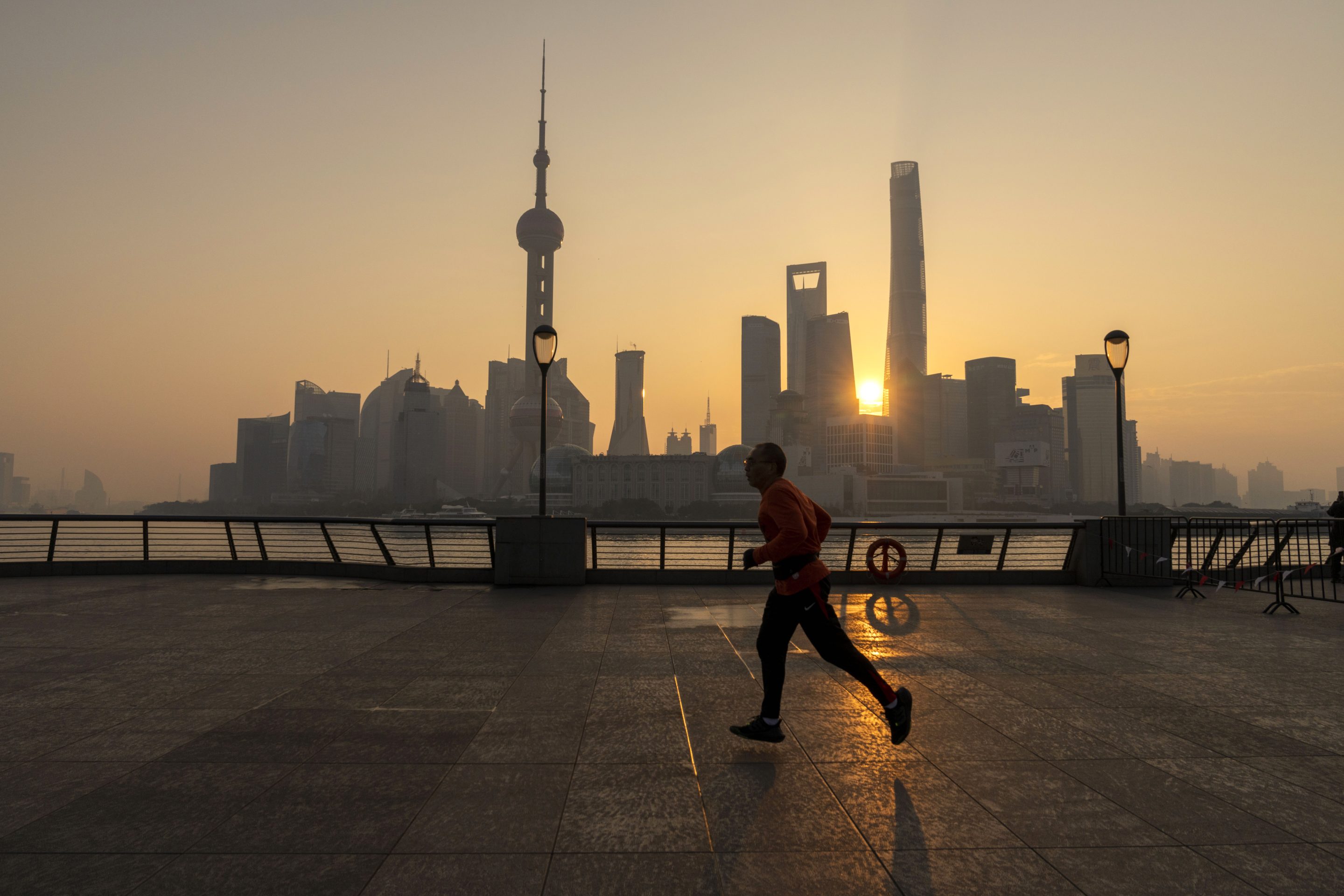
Ask a Fortune 500 CEO to identify the greatest challenge they face in 2024, and there’s a good chance they’ll say geopolitics—as those attending Fortune’s Davos dinner did. Dig a little deeper, you’ll find the top concern among geopolitical risks, for most, is not war in Europe, or missiles in the Red Sea, or widening conflict with Iran. It’s China.
A decade ago, any big company without a robust China strategy was considered to be missing the boat. Today, many are scrambling to get out of that boat. Rising intervention in the private sector by the Chinese Communist Party, growing sanctions against China in the U.S., the risk of conflict across the Taiwan Strait, and squeezed profit margins attributable, in part, to tougher competition from Chinese companies, have all combined to create a rush to “derisk” China business as fast as possible.
But as Fortune’s Geoff Colvin and veteran consultant Ram Charan report in a story for this month’s Fortune magazine, that’s easier said than done. The two talked with dozens of CEOs, CFOs and others doing business with China and found the derisking race is moving slower than expected. In some cases, that’s because China is the only credible source of supply—think batteries or solar panels. In others, it’s because it’s by far the least expensive producer. And in still others, it’s that China’s consumer market is too big to walk away from. “It’s not that I love China,” the recently retired chief of one U.S. heavy equipment manufacturer told Colvin and Charan. “It’s because that’s the only place I can buy a given part at anything close to the price I have today.” Says another, “I’ve got 20% of my business in China. I can’t get out.”
Still, most executives agree there is good reason to diversify—especially if you are in a strategically sensitive industry. That includes exports being controlled by the U.S. government—semiconductors, AI, robotics, biotech—as well as areas deemed high priority by the Chinese government—pharmaceuticals, aerospace, electronics, and renewable energy. There are exceptions. “We’re incredibly bullish on the opportunity,” McDonald’s CEO Chris Kempczinski told Fortune. “There’s no reason China couldn’t be our largest market.” But most others are finding that, as one analyst put it, “they have a lot more China vulnerability than they thought.”
You can read the full story here.
And here’s the question for the day: Which gives a bigger lift to a city’s economy, the Super Bowl or a Taylor Swift concert? Answer: It’s still the Super Bowl, but not by much. According to Bank of America, Swift’s Eras Tour concerts generated an average of $77 in spending at restaurants and $56 at bars…just slightly behind the $96 and $74 spend spurred by Super Bowl LVII. This year, maybe Las Vegas will get the best of both.
More news below.
Alan Murray
@alansmurray
[email protected]
TOP NEWS
Amazon’s biggest profit ever
Amazon reported $13.2 billion in operating income in the final quarter of 2023, a 383% year-on-year increase and the e-commerce company’s highest operating profit ever. Amazon’s shares are up over 7% in extended trading. Fellow tech giant Meta also had a good quarter: Shares in the company are up 15% in after-market trading after the social media giant reported a three-times increase in profits. Fortune
The Amazon of Latin America
Marcos Galperin, founder of MercadoLibre, took his company from a dingy parking garage in 1999 to a South America online marketplace worth roughly the same as eBay and Paypal combined. The company expanded to payment technology to encourage online shopping: MercadoLibre handled 6.5 billion transactions in the first three quarters of 2023. Galperin, who is Argentinian, is cautiously optimistic about newly-elected populist President Javier Milei: “I’m enthusiastic about the ideas he advocates,” he says. Fortune
The battle over AI
Officials around the world are trying to strike a delicate balance in AI regulation. Go too soft, and risk unexpected dangers; go too hard, and stifle innovation. Tech companies are spending millions to ensure the rules aren’t too onerous: Dragos Tudorache, the lead negotiator on the European Union’s AI Act, remembers that he was constantly beset by texts and emails requesting “hundreds and hundreds and hundreds of meetings” with tech companies. Fortune
AROUND THE WATERCOOLER
Commentary: Employees are spending the equivalent of a month’s grocery bill on the return to the office–and growing more resentful than ever, new survey finds by Christine Carter, Erin Eatough, Kristi Leimgruber, and Khoa Le Nguyen
DataSnipper, startup that uses AI to eliminate some of the ‘dread’ in accounting, is valued at $1 billion in latest funding round by Jeremy Kahn
Tim Cook pitches Apple’s new Vision Pro headset as a must-have for businesses despite augmented reality’s checkered history in the workplace by Rachyl Jones
Barstool Sports’ CEO built a $250 million media empire—but she doesn’t think it’s replicable by Emma Burleigh
Commentary: The Biden administration’s freeze on LNG projects is a gift to Putin by Mike Sommers
ByteDance CEO is mad at his employees for missing the AI wave. He’s the latest Chinese tech executive to fret about being too slow to adapt by Lionel Lim
This edition of CEO Daily was curated by Nicholas Gordon.
This is the web version of CEO Daily, a newsletter of must-read insights from Fortune CEO Alan Murray. Sign up to get it delivered free to your inbox.