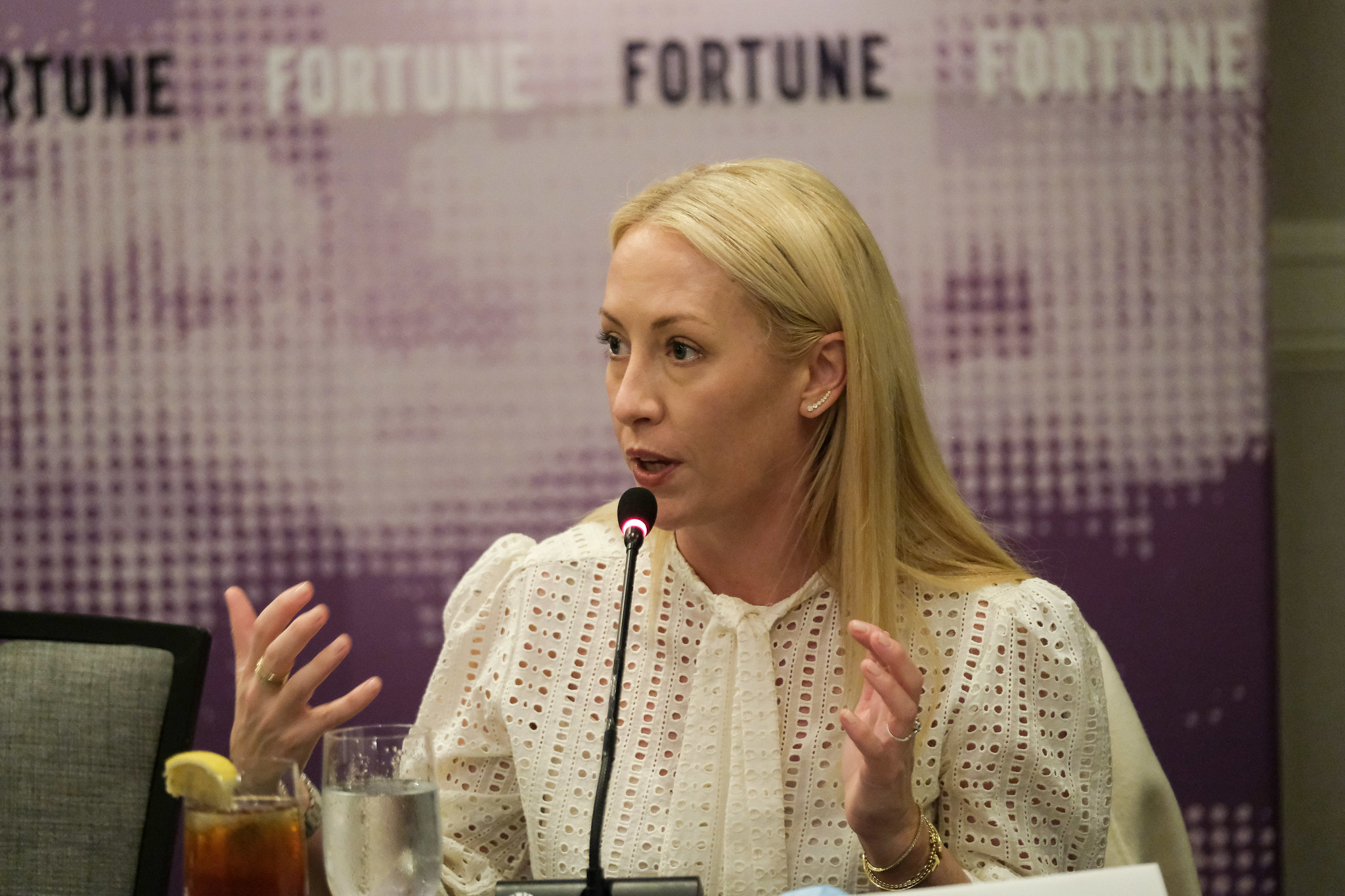
Eventbrite co-founder and CEO Julia Hartz doesn’t underplay how much havoc COVID-19 wreaked on the online events company she co-founded with her husband, Kevin Hartz.
“Essentially, this is what happened in March 2020,” Hartz said regarding the onset of the coronavirus pandemic. “After 14 years of building a company together, pretty much the company, by all intents of purposes, cratered in 14 days.”
When Eventbrite went from “an all-time record-high revenue” to “negative revenue,” the company’s Tableau business analytics dashboards “broke, because we didn’t build them to record negative revenue,” Hartz said on Wednesday during a roundtable discussion at Fortune’s Brainstorm Tech conference in Half Moon Bay, Calif.
Hartz and her husband had to have painful phone calls with customers, which include live events operators and venues, to explain to them the reality of COVID-19’s impact on the physical event business.
Eventually, however, companies turned to hosting virtual conferences and events, which helped Eventbrite’s business as its customers adjusted to a new reality.
Cathy Polinsky, the vice president of engineering at Shopify, explained that her savvy retail customers that quickly pivoted to providing online services ended up reaping big financial rewards. She cited an unnamed coffee shop in Manhattan that “saw their sales drop overnight close to half, because all the offices were shut down,” Polinsky said. By opening up an online store and focusing on selling coffee beans “direct to consumers,” the shop’s sales increased 13x, she said.
“So some business owners have pivoted fast and have had huge success stories,” Polinsky said.
Steven Wolfe Pereira, the co-founder and CEO of education startup Encantos, explained that a major challenge for companies now is ensuring that they stand for principles, as opposed to staying on the sidelines during times of societal unrest. Besides COVID-19, the past 18 months have been defined by a societal reckoning in light of the high-profile killing of George Floyd by police in the summer of 2020.
“Consumers are demanding that companies stand for something, and if you don’t have purpose, you’re not going to have a customer,” Pereira said.
If companies say they care about societal issues like diversity but fail to take any concrete action, Maveron partner Anarghya Vardhana said, that will end up hurting them more than helping.
“Consumers are so smart and have so much access to information,” said Vardhana, whose venture capital firm invests in consumer tech companies. “They can see through any of the fakeness and B.S. that companies may put forth.”
Subscribe to Fortune Daily to get essential business stories straight to your inbox each morning.