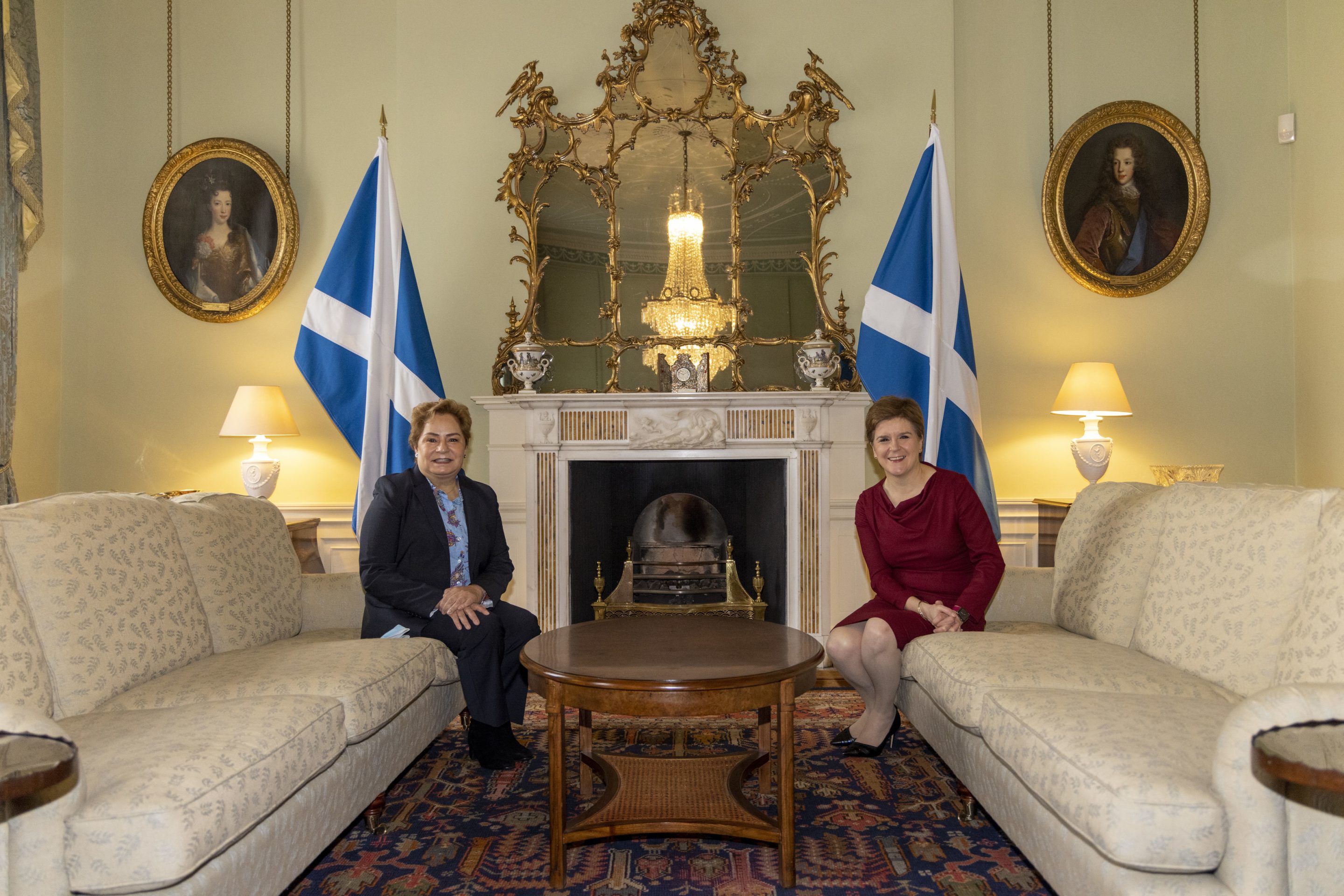
Ahead of a United Nations climate change conference in Scotland starting on Sunday, Fortune CEO Alan Murray caught up with Rich Lesser, global chair of Boston Consulting Group, to discuss how businesses can help make an impact.
More than 190 world leaders will attend the 12-day event, known as COP26, to discuss climate policy. Lesser said he’ll also participate, alongside other business executives, because industry can also be a catalyst for fighting climate change.
“We have so much progress to make on climate that no one part of society is going to be successful absent all parts of society working on it,” Lesser told Fortune. “The business community, which is responsible for so much of emissions to run the global economy, has an outsized role to play in making progress on tackling climate.”
Although many companies had previously opposed climate action, some, more recently, have taken a lead and are encouraging their legislatures to do so as well.
The key is for governments to put a greater price on carbon emissions, said Lesser. It would create more uniformity for businesses so that the ones already committed to net zero carbon emissions aren’t at a disadvantage, Lesser said.
In any case, the reality is that the costs to a company of net zero carbon emissions is manageable, he added. He gave the example of a European car in 2030, which he said would cost an average of $30,000. To make it a “net zero car,” the price would only rise 2%, or about 600 euros, largely because of higher material costs.
Generally speaking, reducing the first 70% of carbon emissions is relatively easy, Lesser said. But the last 30% is more difficult and costly.
Lesser’s solution is better technology.
“The amount of venture capital and private capital that’s going into advanced technology and climate has been growing astronomically,” he said. “It’s long overdue. We wish that would have been happening 10 years ago, but it is happening now.”
Lesser said governments must encourage companies to develop new climate-friendly technology by offering them incentives and tax credits. With extreme weather threatening the globe and some investors pressuring companies to reduce pollution, it’s obvious that governments must prioritize fighting climate change, he said.
Still, Lesser returned to the theme that businesses are helping, and that they can do even more.
“The role of business and the connection between business and government in tackling climate has never been stronger,” he said.
More must-read business news and analysis from Fortune:
- The Impact 20
- Hong Kong’s COVID policies are forcing big banks to consider shifting resources away from the city
- Hyperinflation: Why Jack Dorsey is worried
- Lucid Motor’s Air EV finally hits the roads with a range that blows Tesla away
- Chewy CEO Sumit Singh on the pet boom, the pandemic, and moving from puppyhood to profitability
Subscribe to Fortune Daily to get essential business stories straight to your inbox each morning.