Independent essays and ideasAboutContactDeutsch
Environment

Rising pollution shows China factories bouncing back from coronavirus outbreak

Nitrogen dioxide levels are rising across China’s industrial heartland. The reddish-brown gas mainly enters the air from burning fossil fuels like oil, coal and natural gas.

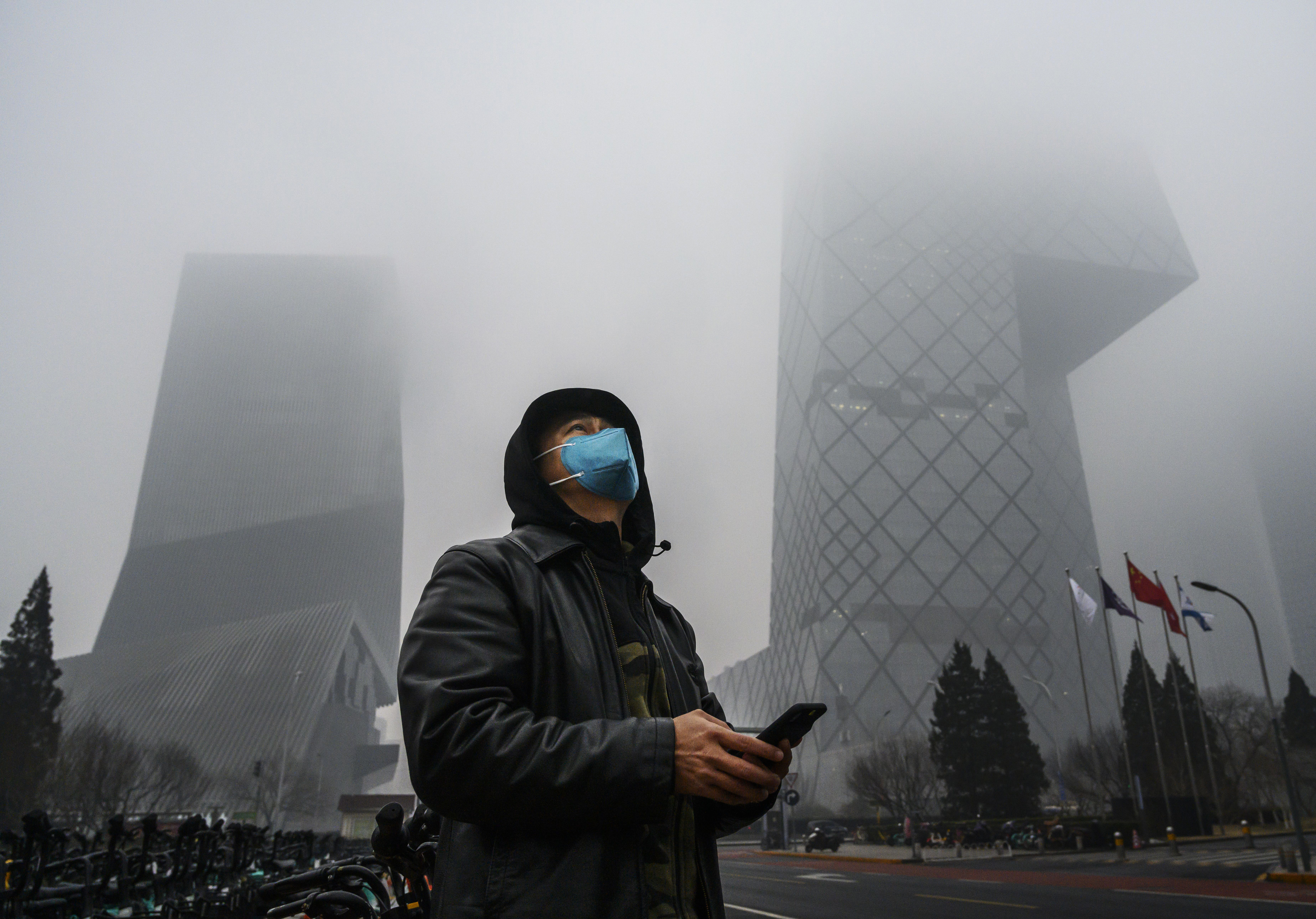
BEIJING, CHINA - FEBRUARY 13: A Chinese man wears a protective mask as he stands near the CCTV building in fog and pollution during rush hour in the central business district on February 13, 2020 in Beijing, China. The number of cases of the deadly new coronavirus COVID-19 rose to more than 52000 in mainland China Thursday, in what the World Health Organization (WHO) has declared a global public health emergency. China continued to lock down the city of Wuhan in an effort to contain the spread of the pneumonia-like disease which medicals experts have confirmed can be passed from human to human. In an unprecedented move, Chinese authorities have maintained and in some cases tightened the travel restrictions on the city which is the epicentre of the virus and also in municipalities in other parts of the country affecting tens of millions of people. The number of those who have died from the virus in China climbed to over 1300 on Thursday, mostly in Hubei province, and cases have been reported in other countries including the United States, Canada, Australia, Japan, South Korea, India, the United Kingdom, Germany, France and several others. The World Health Organization has warned all governments to be on alert and screening has been stepped up at airports around the world. Some countries, including the United States, have put restrictions on Chinese travellers entering and advised their citizens against travel to China. (Photo by Kevin Frayer/Getty Images)

Satellite data show economic activity in China could be picking up following a steep drop off caused by the coronavirus

Nitrogen dioxide levels rose across China’s industrial heartland, according to the most recent Copernicus Atmosphere Monitoring Service data compiled by Windy.Com. The reddish-brown gas mainly enters the air from burning fossil fuels like oil, coal and natural gas. Levels plummeted in February after Chinese authorities locked down communities to contain the virus. 

The data confirms anecdotal reports that Chinese workers are slowly heading back to their jobs. The economy was probably running at 60% to 70% capacity last week, according to a Bloomberg Economics report, up from about 50% earlier in February.  Government controls and the fear of going outside have curtailed spending and kept factory staff at home. That reduced output and clogged up logistic supply chains.

While pollution in China typically drops early in the year as factories pause for Lunar New Year celebrations, this year’s decline caught scientists off guard because of its severity. Upheaval from the coronavirus is prompting global policy makers to weigh extraordinary economic stimulus. 

More must-read stories from Fortune:

—Before coronavirus, there were SARS and MERS. Do epidemics ever really end?
Coronavirus is giving China cover to expand its surveillance. What happens next?
—The Greek economy is roaring back—which could lead to mass evictions
—10 journalists who deserve justice immediately
—Fortune Explains: Tariffs and trade wars

Catch up with Data Sheet, Fortune’s daily digest on the business of tech.