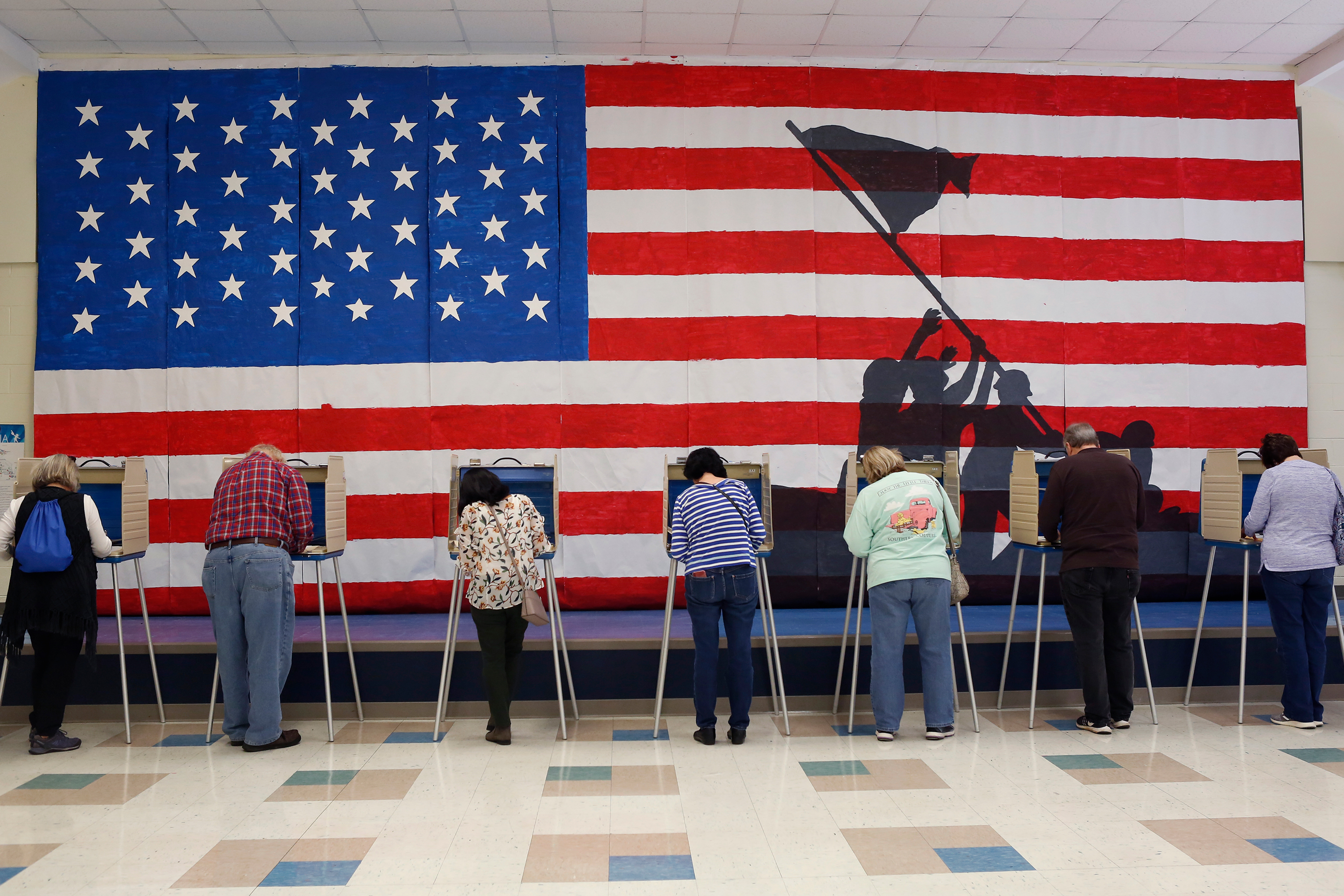
Millions of Americans have been purged from the voter rolls in recent years, as state governments seek to remove the names of individuals who have died, relocated, or otherwise become ineligible to vote.
But such purges have been widely criticized owing to instances in which states have relied on bad information, removing eligible voters, who are often unaware until they attempt to cast their ballots on Election Day.
“The most important thing people get wrong is they forget that purges are a necessary and important part of administering our elections,” Myrna Pérez, director of the Brennan Center’s Voting Rights and Elections Program, told Fortune. “We all benefit when our rolls are clean, and sometimes we forget that purges—when done properly—are a good thing.”
But large-scale systematic purges that remove hundreds of thousands of names at a time are more likely to round up individuals who should not be removed from the rolls.
“By virtue of their size and by virtue of their reliance on third-party information, they are prone to errors,” Pérez said. “And because these purges often happen behind closed doors with someone at the keyboard, a voter can find out that they’ve been purged too late.”
Purging errors can happen for reasons as simple as not responding to an election mailing or having an old address on file—and not all states require that voters be informed they are no longer registered to vote.
Purges gone wrong
In the years leading up to the 2018 midterm elections, the State of Georgia purged 1.4 million voters from its rolls. A report from the Atlanta Journal-Constitution found that 500,000 Georgia voters were purged in one night in 2017, and nearly 10% were removed that year.
Georgia is one of a few states in the U.S. that doesn’t just remove voters who are inactive, but also those who don’t have “contact” with the election system. This can include not updating a registration or failing to respond to mailings from county election offices.
In many states, election officials will send postcards to individuals who haven’t voted in a while. Those who don’t respond are purged and usually never informed about it.
“The information flow to let you know that you’ve been purged is not good,” explained Page Gardner, founder and president of the Voter Participation Center (VPC), which acquires lists of individuals who have been, or will be, purged and seeks to inform them before they head out to vote.
Gardner said VPC often needs to send a voter registration card to an individual as many as four to five times to get a response—so sending just one notice is inadequate.
“What’s going on is frankly insidious,” she said. “Just because you don’t exercise a right doesn’t mean you don’t have a right. And there’s a right to vote in this country that needs to be safeguarded.”
Last year, another purge list was created in Ohio featuring 235,000 names of those the state said had either died, moved away, or, more often than not, had simply not voted in the past several elections.
Approximately 6,800 names were found to be listed in error, but were removed before any purge took place, according to Ohio Secretary of State Frank LaRose’s office.
“Ultimately, we need to remember that humans make mistakes, and our voter registration system is managed by humans,” said Jen Miller, executive director of the League of Women Voters of Ohio. “With our voter registration system largely the same as it was decades ago, it is up to individual voters to make sure their registration is in order ahead of each election in which they hope to participate.”
And there are simple ways for eligible U.S. citizens to verify their registration status to avoid any unwelcome surprises come Election Day.
Are you still registered to vote?
To determine your voter registration status, vote.org, usa.gov, rockthevote.org, headcount.org, and the National Association of Secretaries of State all have tools that enable voters to check their status or update their information.
The 37 states and Washington, D.C., that offer online registration also have these functions available within their online portals.
“It is important for every voter to verify that they are on the voter rolls and that their info is correct,” said Miller. “And they need to do that before the registration deadline in their state.” To avoid being purged, Miller advised that voters make sure they are registered to vote under the correct address.
But if you have been purged from the voter rolls, getting back on is usually as simple as reregistering, Miller said. Still, it is important to check your registration often—and find any problems before it’s too late.
“Make sure your records are up to date, and start checking more than 30 days before an election,” Pérez said. “If they’re not accurate, then call your local election office.”
Because voter registration deadlines vary from state to state—and registration cutoffs are 29 days before an election in some states—checking your information early is vital.
“The fact that in most states across the U.S. the registration deadline is so far in front of the election is disenfranchising in and of itself,” Gardner said.
You can review the voter registration rules for your state at vote.org. A list of primary dates and registration deadlines for the 2020 presidential primary and election is posted below.
2020 primary dates and registration deadlines
*This list was compiled by Fortune using data from the National Conference of State Legislatures
Correction, Jan. 15, 2020: An earlier version of this story misstated the number of Ohio voters who were erroneously included in a 2019 purge list. Approximately 6,800 registered voters were affected.
More must-read stories from Fortune:
—Donald Trump and the power of incumbency
—How the UN’s climate efforts could change the business world
—The wealthiest members of Congress—and how they made their millions
—USPS could privatize as early as next year
—2020 Crystal Ball: Predictions for the economy, politics, technology, and more
Get up to speed on your morning commute with Fortune’s CEO Daily newsletter.