Independent essays and ideasAboutContactEuropean Edition
Finance

Boeing Looks to Raise Funds to Help It Fight Through 737 Max Debacle

While Boeing had about $20 billion in available funds at the end of the third quarter, costs stemming from the Max crisis are increasing.

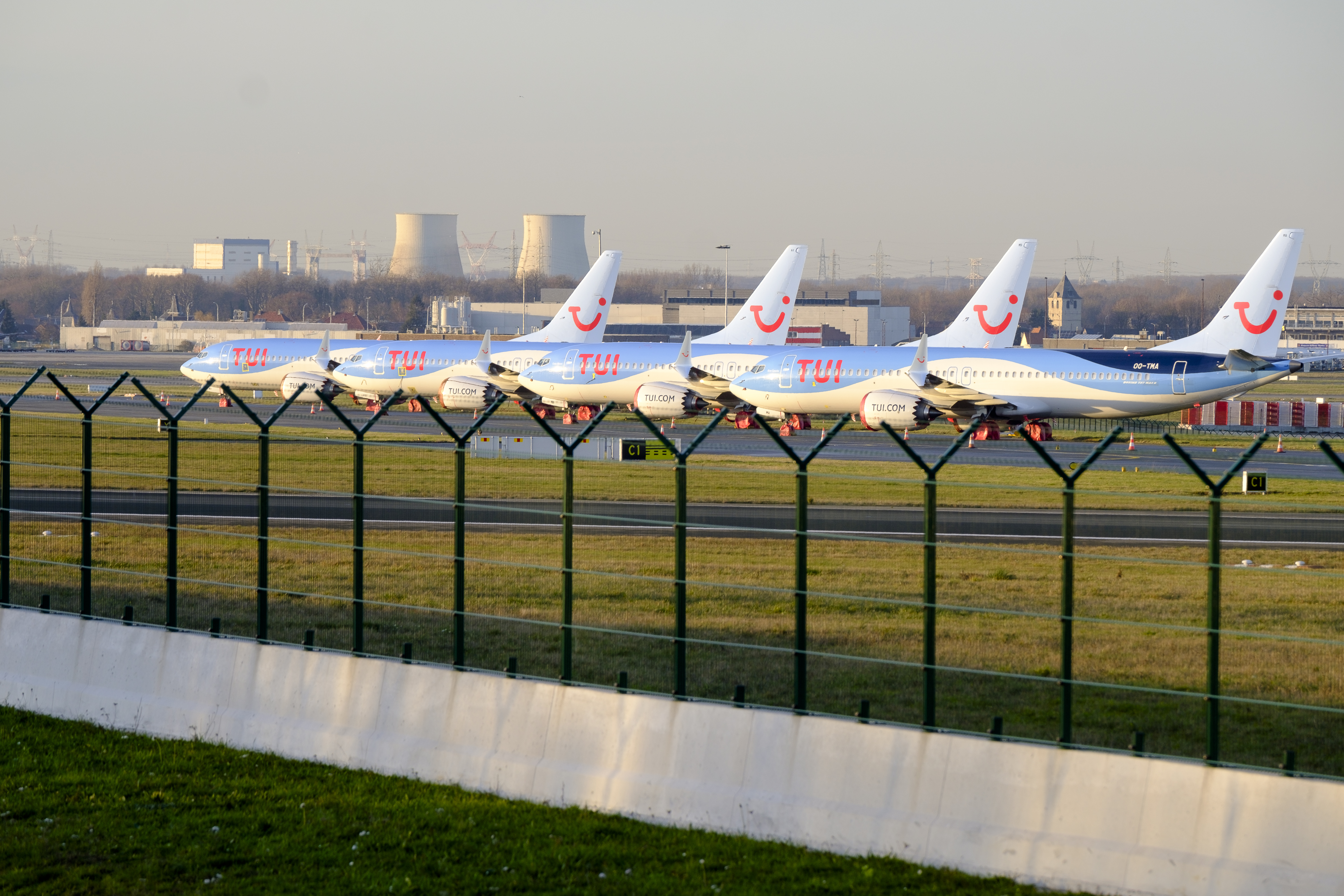
BRUSSELS, BELGIUM - DECEMBER 18: 4 Boeing 737 MAX from TUI fly Belgium are docked in Brussels on December 18, 2019. On December 16, 2019, Boeing announced: 'Safely returning the 737 MAX to service is our top priority. We know that the process of approving the 737 MAX's return to service, and of determining appropriate training requirements, must be extraordinarily thorough and robust, to ensure that our regulators, customers, and the flying public have confidence in the 737 MAX updates. As we have previously said, the FAA and global regulatory authorities determine the timeline for certification and return to service. We remain fully committed to supporting this process. It is our duty to ensure that every requirement is fulfilled, and every question from our regulators answered. Throughout the grounding of the 737 MAX, Boeing has continued to build new airplanes and there are now approximately 400 airplanes in storage. We have previously stated that we would continually evaluate our production plans should the MAX grounding continue longer than we expected. As a result of this ongoing evaluation, we have decided to prioritize the delivery of stored aircraft and temporarily suspend production on the 737 program beginning next month.' Created in 2004 under the name of TUI Airlines Belgium, it took over, after the bankruptcy of Sobelair, which until then had been the main airline of the tour operator Jetair, to transport Belgian tourists to their destination. On October 19, 2016, Jetairfly and the other companies in the TUI group were renamed TUI Airlines to bring together the different brands of the group under the same name. (Photo by Thierry Monasse/Getty Images)

Boeing Co. is looking at raising additional debt to help bolster its resources following the grounding of its 737 Max jetliner, Dow Jones reported.

While Boeing had about $20 billion in available funds at the end of the third quarter, costs stemming from the Max crisis are increasing, the news agency said, citing people familiar with the matter it didn’t identify.

Boeing is halting production of the Max, a model that has yet to gain approval to resume flights after two fatal crashes. While that’s reduced some costs it also means a longer wait for payments for finished planes. The company also faces compensation claims for airlines disrupted by the grounding, as well as from families of the crash victims.

Analysts expect Boeing to raise as much as $5 billion in extra debt to help cover spending that may exceed $15 billion in the first half, Dow Jones said. Funds would help maintain Max production facilities and finished planes, as well as close the $4 billion purchase of an 80% stake in the airliner business of Embraer SA.

More must-read stories from Fortune:

—25 ideas that will shape the 2020s
USPS could privatize as early as next year
—UPS’s $20 billion bet on e-commerce is paying off
—Airbnb copes with a bad trip on the road to a 2020 IPO
2020 Crystal Ball: Predictions for the economy, politics, technology, etc.
Subscribe to Fortune’s Eye on A.I. newsletter, where artificial intelligence meets industry.