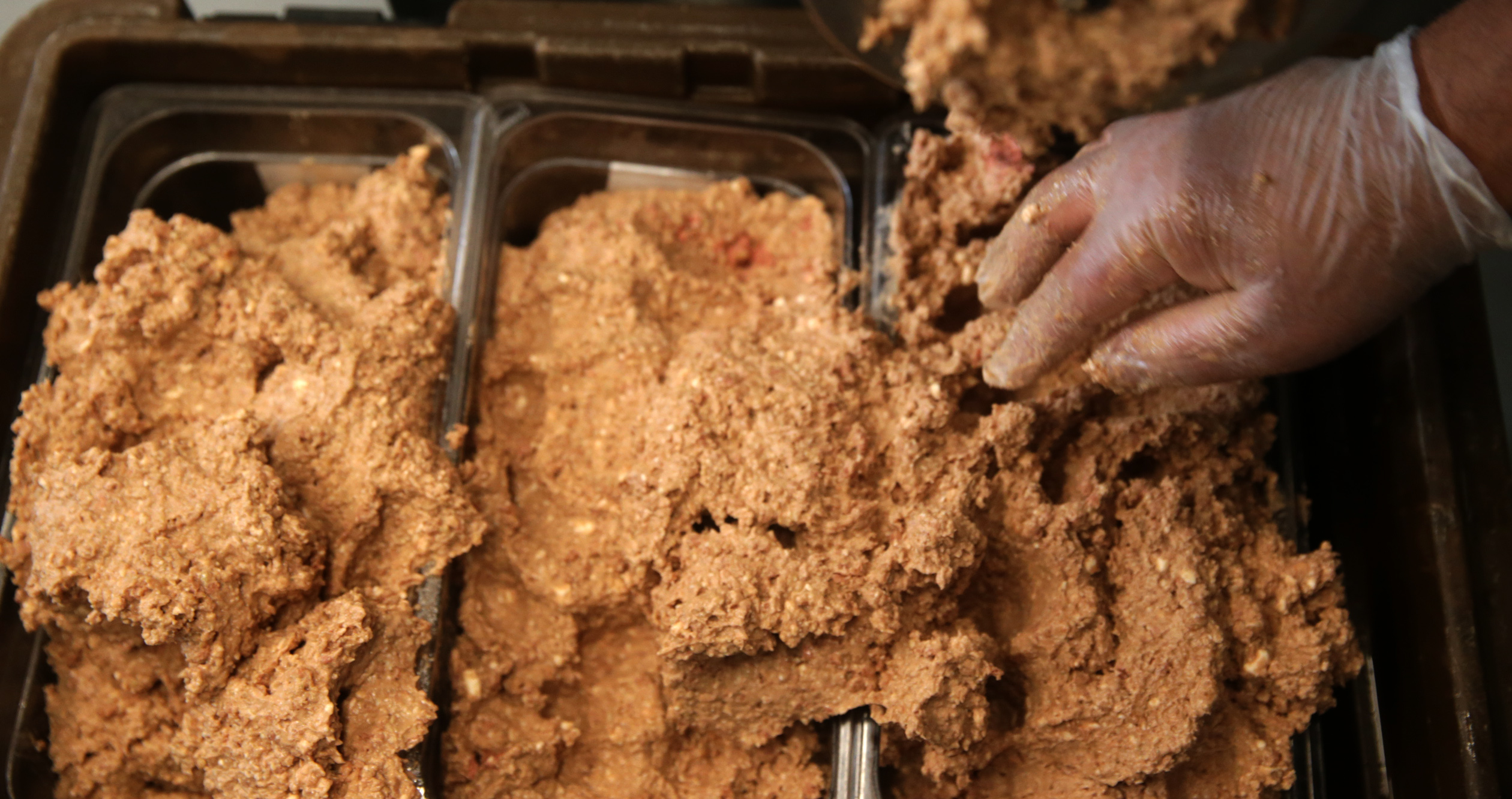
Impossible Foods Inc. is working to launch plant-based pork as it looks to enter China, the crown jewel of the $2.7 trillion global meat market.
“We already have very good prototypes of plant-based pork,” Chief Executive Officer Pat Brown said in a Bloomberg TV interview at the China International Import Expo in Shanghai on Wednesday. “It’s really just a matter of commercializing and scaling that.”
With China accounting for 28% of the world’s meat consumption, the Asian giant has “always been the most important country for our mission,” he said. His company is in discussions with potential local partners and Chinese government officials, he added.
A successful China entry would be a game-changer for the nascent imitation meat market, which currently accounts for less than 1% of the global meat consumption, but has the potential to reach 9% by 2040, according to Jefferies analyst Simon Powell. Impossible’s faux beef burgers are already served at Burger King and other restaurants in the U.S., while it’s also seeking to sell in Europe.
Over 60% of Chinese consumers’ daily meat intake is pork, but an epidemic of African swine fever has forced widespread hog culling. Pork prices spiked nearly 70% in September, hurting household budgets.
“As a small company, we are not going to fill the void left by the African swine fever epidemic,” said Brown. “But this is an opportunity as people are going to realize how vulnerable animal-based food production is. It’s a real food security issue and we want to help China solve that.”
Brown said that Chinese government officials “are really committed to reducing their environmental footprint and very aware of food security issues.”
“Demand for meat exceeds by a factor of four what China can produce on its own land,” he said. “That’s why every time someone eats a steak in China, a little puff of smoke goes up in the Amazon.“
More must-read stories from Fortune:
—Energy companies say the oil glut—and shrinking profits—aren’t over
—Give or take a trillion, banks haggle over IPO valuation of Saudi Aramco
—China launching its 5G ahead of schedule on a spectrum the U.S. can’t match
—Why China’s digital currency is a ‘wake-up call’ for the U.S.
—Europe is starting to declare its cloud independence
Catch up with Data Sheet, Fortune’s daily digest on the business of tech.