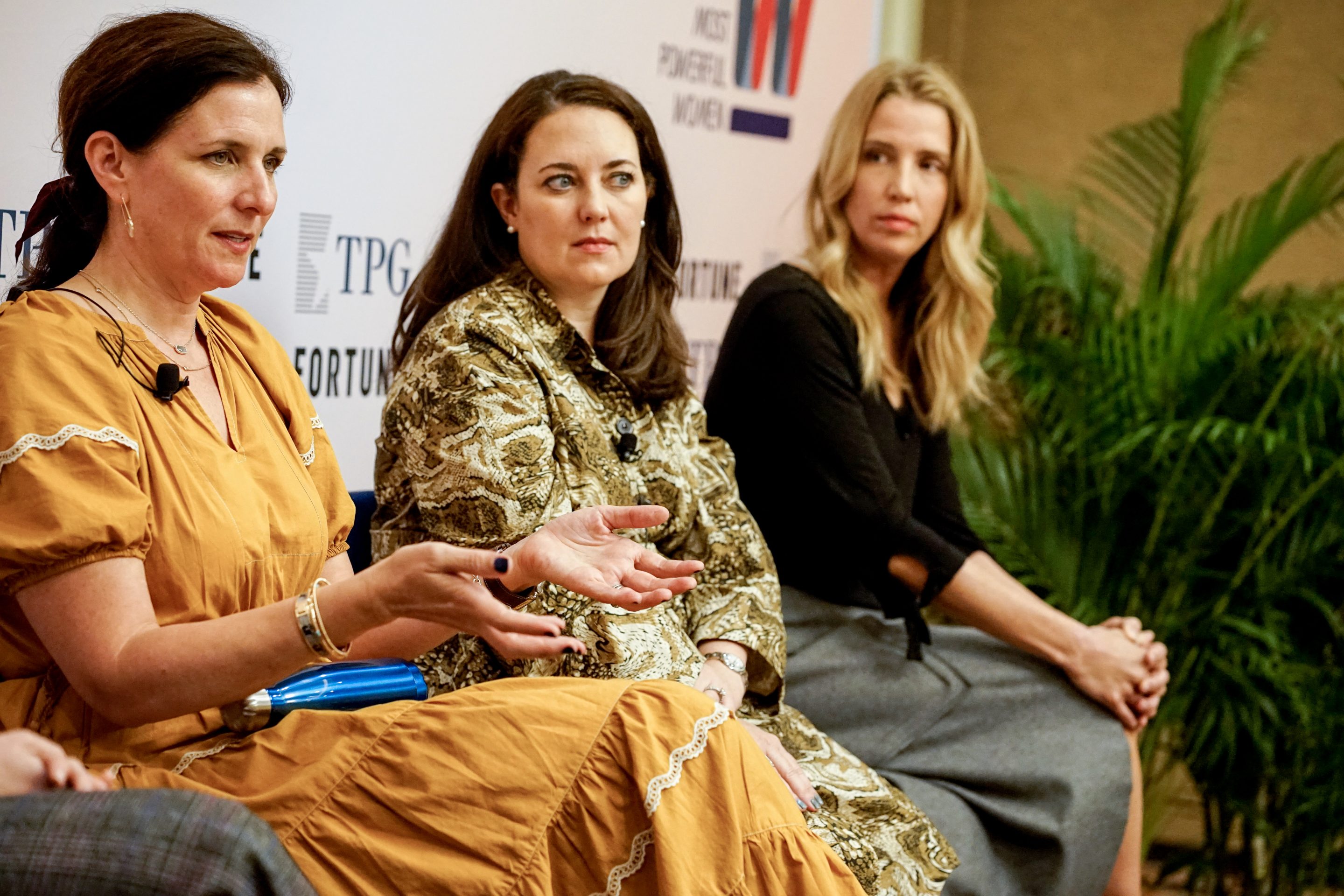
“What issues am I willing to lose customers over?” That’s the question Pinterest Chief Marketing Officer Andrea Mallard said companies need to ask themselves when dealing with controversial topics that could put your brand in direct opposition to a chunk of your customer base.
“As a brand, you just have to be unapologetic about the world you’re trying to build,” said Mallard.
Pinterest recently decided to act on a hot-button issue—the spread of false medical information. Pinterest blocked all “vaccination”-related searches earlier this year since most results touted the scientifically disproven claim that vaccines aren’t safe.
Now, the company has partnered with groups like the Centers for Disease Control, the World Health Organization, and the American Academy of Pediatrics to provide pins that offer science and facts when a person does a search on “vaccinations.”
“If you just rely on the algorithm, it can get really dangerous really fast,” Mallard said at a branding panel at Fortune’s Most Powerful Women Summit in Washington, D.C. “Not making a decision was causing harm, and we had to take responsibility.”
In a time when other social media networks like Twitter and Facebook are deciding how to deal with hate speech, violence, and terrorism-recruitment campaigns on their platforms, Pinterest took quick and aggressive action. But it also attracted a slew of criticism: people have criticized the company for political bias, censorship, and a lack of transparency.
“We’re going to make the right calls even if they feel hard,” Mallard said. “We faced backlash, and that’s OK.”
The brands that are most successful, she said, are the ones who are transparent with their consumers during the good times as well as the trying times.
Kerry Cooper, president and chief operating officer of shoe brand Rothy’s, echoed Mallard’s comments, adding that when crisis strikes, it’s the company’s response that matters. “Modern consumers look for brands to be transparent,” Cooper said. “Things don’t go well for [companies] a lot of the time, but you just have to be honest about it.”
More must-read stories from Fortune’s MPW Summit:
—How a corporate board can engage on company culture
—Female directors agree a “blunt instrument is necessary” to get women on boards
—How to avoid the biggest ‘decision trap’ in business
—Peloton’s CFO has “so much sympathy” for WeWork
—Corporate pivots are often disruptive. They don’t have to be
Keep up with the world’s most powerful women with Fortune’s Broadsheet newsletter.