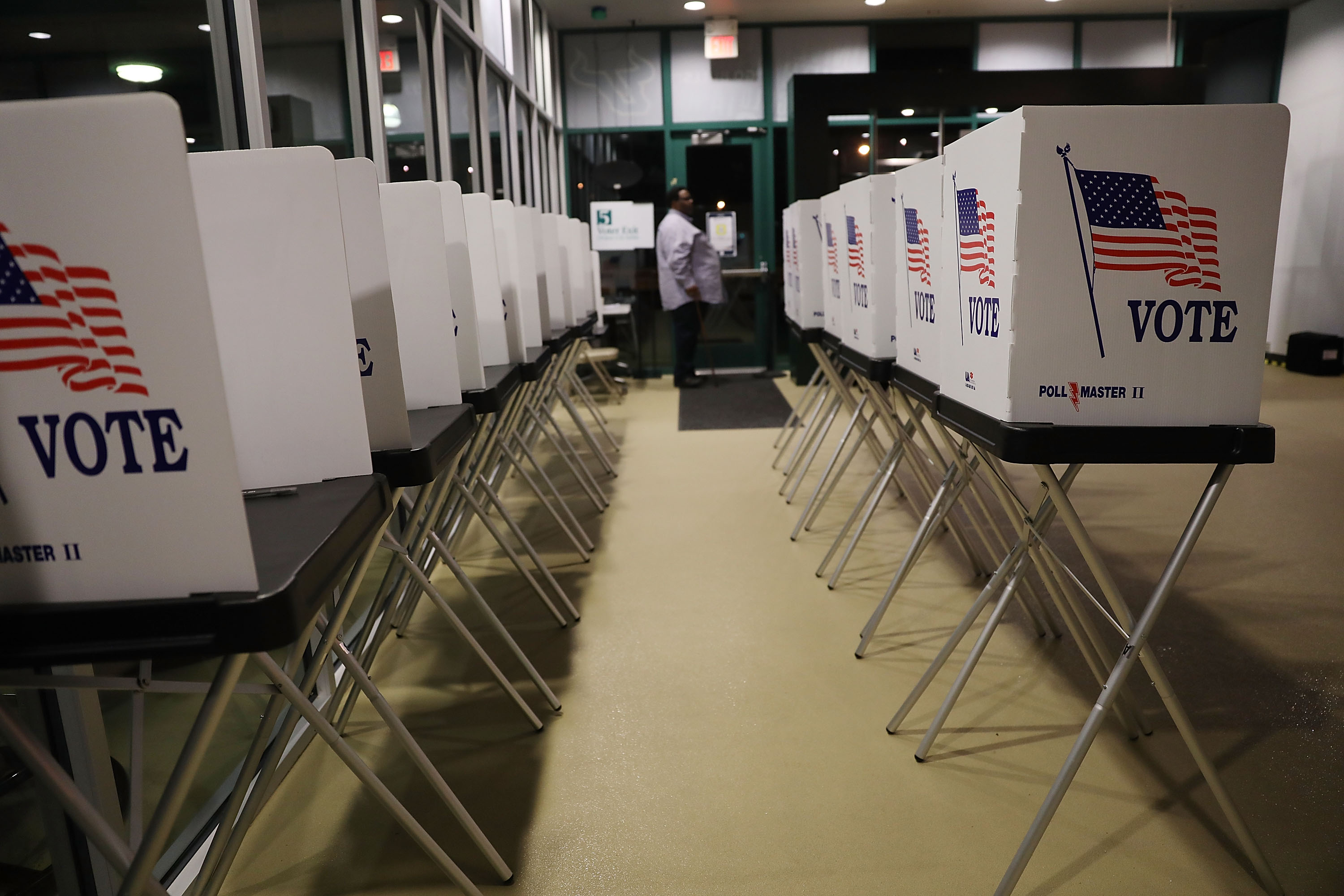
Cesar Melendez will not be voting today.
Melendez is one of 6.2 million US citizens who cannot vote or hold office because of a felony conviction on their record. He was arrested on guns and drug charges when he was 23 and served seven years. He’s 45 now, and has been out of prison and working for 15 years.
Melendez lives in Florida, one of three states including Iowa and Kentucky that have lifetime voting bans for former felons.
In Kentucky, the situation is particularly acute. One in ten of the state’s adults and one in four African Americans are banned from voting for life, according to The Sentencing Project. It’s the worst record in the US. “The share of voting-age Kentuckians with felony records rose nearly fourfold from 1980 to 2010. Among the state’s black residents, it grew nearly sevenfold,” reports The New York Times. But, why? “Despite changes to criminal sentencing guidelines seven years ago and a declining crime rate, the state’s prison population continues to rise, with well over half the 24,000-plus prisoners warehoused in overcrowded county jails.”
But in Florida, voters are considering an amendment to their state’s constitution that would restore voting rights to residents who have completed their sentences. It would be a bridge back to civic participation for some 1.5 million people, many of whom, like Melendez, have been trying desperately to get their rights back.
In a poignant essay, Melendez’s sister Sheena Medina, a technologist who’s worked in media and the start-up world, shared the pain of her brother’s incarceration, their complicated family life, and his struggle to stay employed and out of trouble once he served his sentence. But she only recently learned that her brother’s quest to vote again involved a humiliating red-tape runaround that currently requires petitioning the state for clemency, and a lot of time on hold. It’s a form of voter disenfranchisement that has its roots in Jim Crow:
In Illinois, where my brother committed his crime and served his sentence, the right to vote is lost only while incarcerated and is automatically restored after release. Two states, Maine and Vermont, allow felons to vote while in prison. In other states, like Kentucky and Iowa, felons who serve their full sentences, including parole, must apply to state officials in order to regain their right to vote. It is not automatic. Florida is similar, though convicted felons there must wait at least five years after serving their full sentences before they can even apply. Once they apply, individuals must be granted clemency on a case by case basis.
The state of Florida currently has a backlog of more than 10,000 applications. Since 2011, only a fraction of the more than 100,000 former felons who sought to have their rights restored were successful.
In Illinois, where my brother committed his crime and served his sentence, the right to vote is lost only while incarcerated and is automatically restored after release. Two states, Maine and Vermont, allow felons to vote while in prison. In other states, like Kentucky and Iowa, felons who serve their full sentences, including parole, must apply to state officials in order to regain their right to vote. It is not automatic. Florida is similar, though convicted felons there must wait at least five years after serving their full sentences before they can even apply. Once they apply, individuals must be granted clemency on a case by case basis.
The state of Florida currently has a backlog of more than 10,000 applications. Since 2011, only a fraction of the more than 100,000 former felons who sought to have their rights restored were successful.
It’s looking increasingly likely that Florida voters will turn out for Amendment 4 today. If all goes well, Melendez may be voting in the next presidential election.
But in one way, Melendez’s work has already paid off. “As I get older, I realize I don’t know much about my brother,” says Medina. She ticks through a list of what she remembers, like a LinkedIn of bad-to-better breaks. But she now knows that for her brother, voting is not just about doing his duty, it’s about the dignity of being seen as a valued citizen. “I only know him through the lens of his past. I’ve witnessed firsthand how he’s had to live the rest of his life suffering the consequences of his early mistakes.”