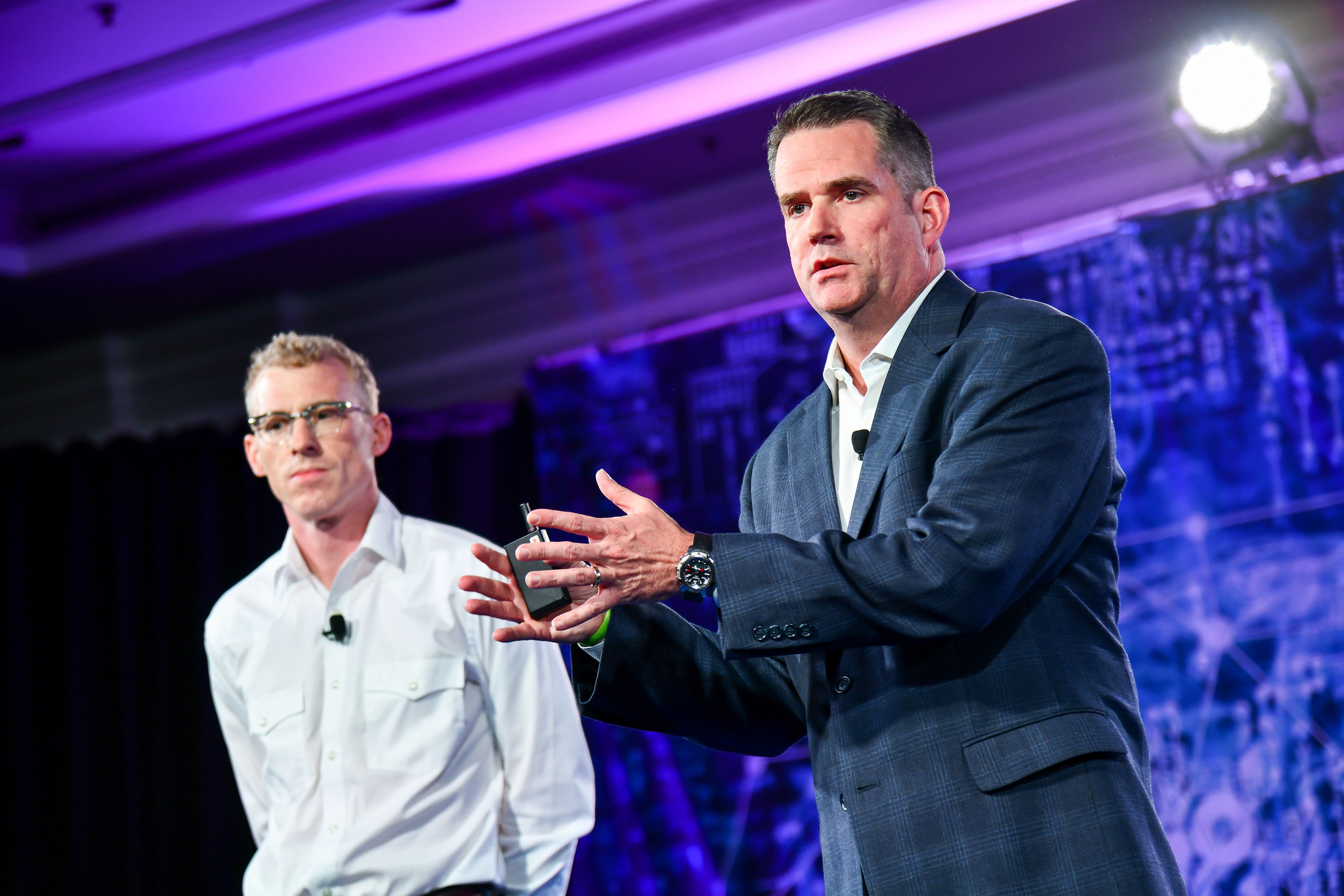
Cargill, the 153-year-old food production giant, is a big believer in artificial intelligence and satellite technology.
Speaking at Fortune’s annual Brainstorm Reinvent conference on Monday in Chicago, Cargill’s vice president and leader of global analytics James Weed explained the reasoning behind his company’s partnership with the data-crunching startup Descartes Labs. The New Mexico startup specializes in using AI technologies, like machine learning, to analyze satellite imagery.
It made sense for Cargill to sync up with Descartes Labs so the food giant could learn whether its’ satellite imagery technology could be used to better forecasts crop yields, Weed said.
Weed said that there’s currently “a lot of companies promising AI and machine learning” as well as “all of the different buzzwords” that are trendy. This amount of noise makes it “challenging for big companies to know who you partner with.”
Cargill debuted a few unspecified test trials with Descartes Labs, and was pleased with the results.
Weed said that outsiders asked him why Cargill didn’t simply buy Descartes Labs, if the results were so good. Weed explained that his main concern was that the tiny Descartes Labs would get lost within the bureaucracy of a giant company, and that “the value would disappear.”
The satellite imagery startup is able to operate in a fast and agile way, and Weed was worried that its speed and efficiency would wither if it was absorbed into a big company.
Get Data Sheet, Fortune’s technology newsletter.
“Let’s partner and keep them separate,” Weed said of the company’s decision. This partnership lets Cargill conduct multiple test runs with Descartes Labs “instead of doing this big shock and awe with our business,” Weed said.
Besides being a Descartes Labs customer, Cargill also contributed to a $30 million investment round in 2017, according to media reports.