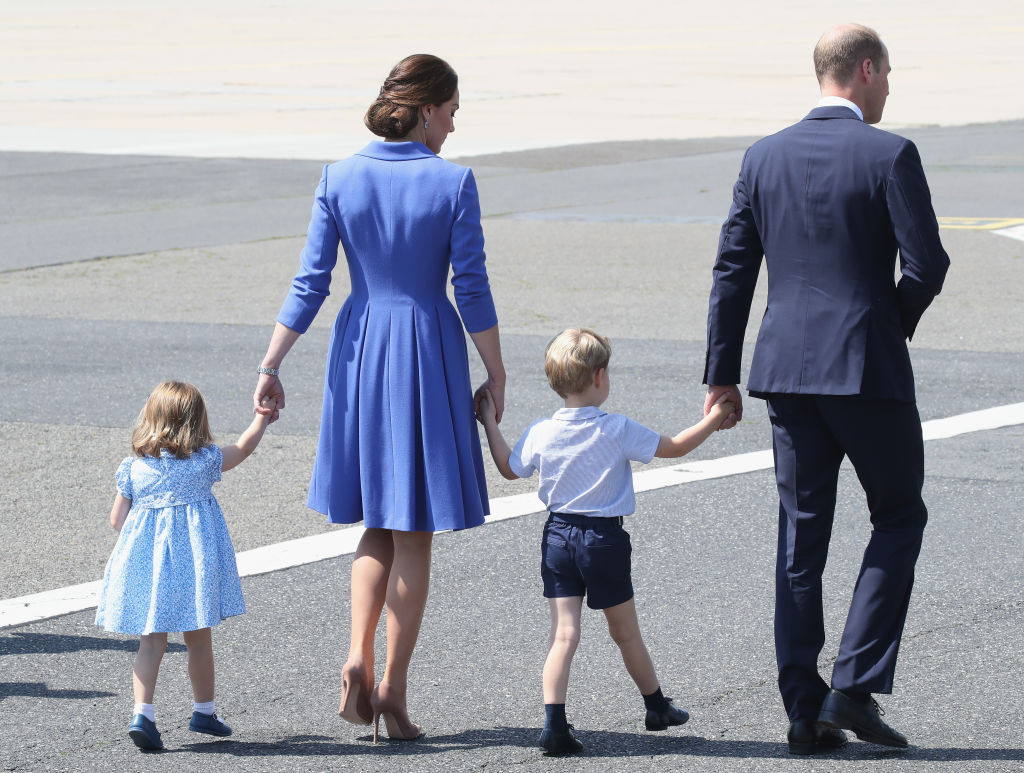
Kensington Palace yesterday confirmed that the Duchess of Cambridge, Kate Middleton, is pregnant with her third child with husband Prince William.
Royal watchers are already speculating about the gender of Royal Baby No. 3, who will join siblings Prince George, 4, and Princess Charlotte, 2. In betting that started mere minutes after the palace’s announcement, odds on the unborn baby’s gender were equal at 10/11 for a boy and a girl, according to London-based betting house William Hill. Alice was the top choice for the baby’s name with odds at 8/1, followed by Elizabeth at 10/1, James at 12/1, and Arthur at 12/1.
The gender of the Duchess’s baby is especially notable this time around, since he or she will be the younger sibling of Princess Charlotte. Years ago, a new baby brother would have usurped Charlotte’s place in the line of succession to the throne, but that’s no longer the case. If Royal Baby No. 3 is indeed a boy, he will not displace Charlotte, but fall in line behind her. That’s due to a new law introduced shortly after the Duke and Duchess of Cambridge married in 2011, that gave any daughter of a future U.K. monarch equal right to the throne. The law took effect four years later. Its passage upended a centuries-old succession law that gave the sons of a monarch precedence over any daughter in inheriting the crown. Only if a monarch had no male heirs—as was the case for the Queen’s father George VI—could the throne be passed to a daughter.
“The idea that a younger son should become monarch instead of an elder daughter simply because he is a man…is at odds with the modern countries that we have become,” David Cameron, then the U.K. prime minister, said at the time of the law’s passage.
Interestingly enough, Japan is experiencing a crisis that’s resulting from not adapting to modern standards of equality. The day before the Duchess’s pregnancy announcement, Japan’s Princess Mako made official her engagement to a commoner. Her marriage to a non-royal means she’ll forfeit her title, as dictated by law. Her departure from the imperial family highlights a sort of existential crisis for Japan’s royals. Unlike Britain, in Japan, only male heirs can inherit the Chrysanthemum throne, and the imperial family is running out men.