
• Home
  • Latest
  • Fortune 500
  • Finance
  • Tech
  • Leadership
  • Lifestyle
  • Rankings
  • Multimedia

Trendingnow

1

As Big Tech showers employees with perks to win the talent war, Nvidia built a nearly $5 trillion company by making people pay for their own lunch

2

Mark Zuckerberg feeds his cows macadamia nuts and beer to create the 'highest-quality beef in the world' on his $300 million estate in Hawaii

3

Current price of oil as of July 2, 2026

1

As Big Tech showers employees with perks to win the talent war, Nvidia built a nearly $5 trillion company by making people pay for their own lunch

2

Mark Zuckerberg feeds his cows macadamia nuts and beer to create the 'highest-quality beef in the world' on his $300 million estate in Hawaii

3

Current price of oil as of July 2, 2026
AI

A.I. can radically lengthen your lifespan, says futurist Ray Kurzweil. Here’s how

By
Ray Kurzweil
Ray Kurzweil
Down Arrow Button Icon
By
Ray Kurzweil
Ray Kurzweil
Down Arrow Button Icon
June 25, 2024, 4:49 AM ET
Author Ray Kurzweil at the 2018 SXSW Conference and Festivals in Austin, Texas.
Author Ray Kurzweil at the 2018 SXSW Conference and Festivals in Austin, Texas. Travis P Ball/Getty Images for SXSW
Add Fortune on Google for similar content.

We are beginning to use AI for discovery and design of both drugs and interventions, and by the end of the 2020s biological simulators will be sufficiently advanced to generate some key safety and efficacy data in hours rather than the years that clinical trials typically require. The transition from human trials to simulated in silico trials will be governed by two forces working in opposite directions.

Recommended Video

On the one hand there will be a legitimate concern over safety: we don’t want the simulations to miss relevant medical facts and erroneously declare a dangerous medication to be safe. On the other hand, simulated trials will be able to use vastly larger numbers of simulated patients and study a wide range of comorbidities and demographic factors—telling doctors in granular detail how a new treatment will likely affect many different kinds of patients.

In addition, getting lifesaving drugs to patients faster may save many lives. The transition to simulated trials will also involve political uncertainty and bureaucratic resistance, but ultimately the effectiveness of the technology will win out.

As a result of these technologies, the old linear models of progress in medicine and longevity will no longer be appropriate. Both our natural intuition and a backward-looking view of history suggest that the next twenty years of advances will be roughly like the last twenty, but this ignores the exponential nature of the process. Knowledge that radical life extension is close at hand is spreading, but most people—both doctors and patients—are still unaware of this grand transformation in our ability to reprogram our outdated biology.
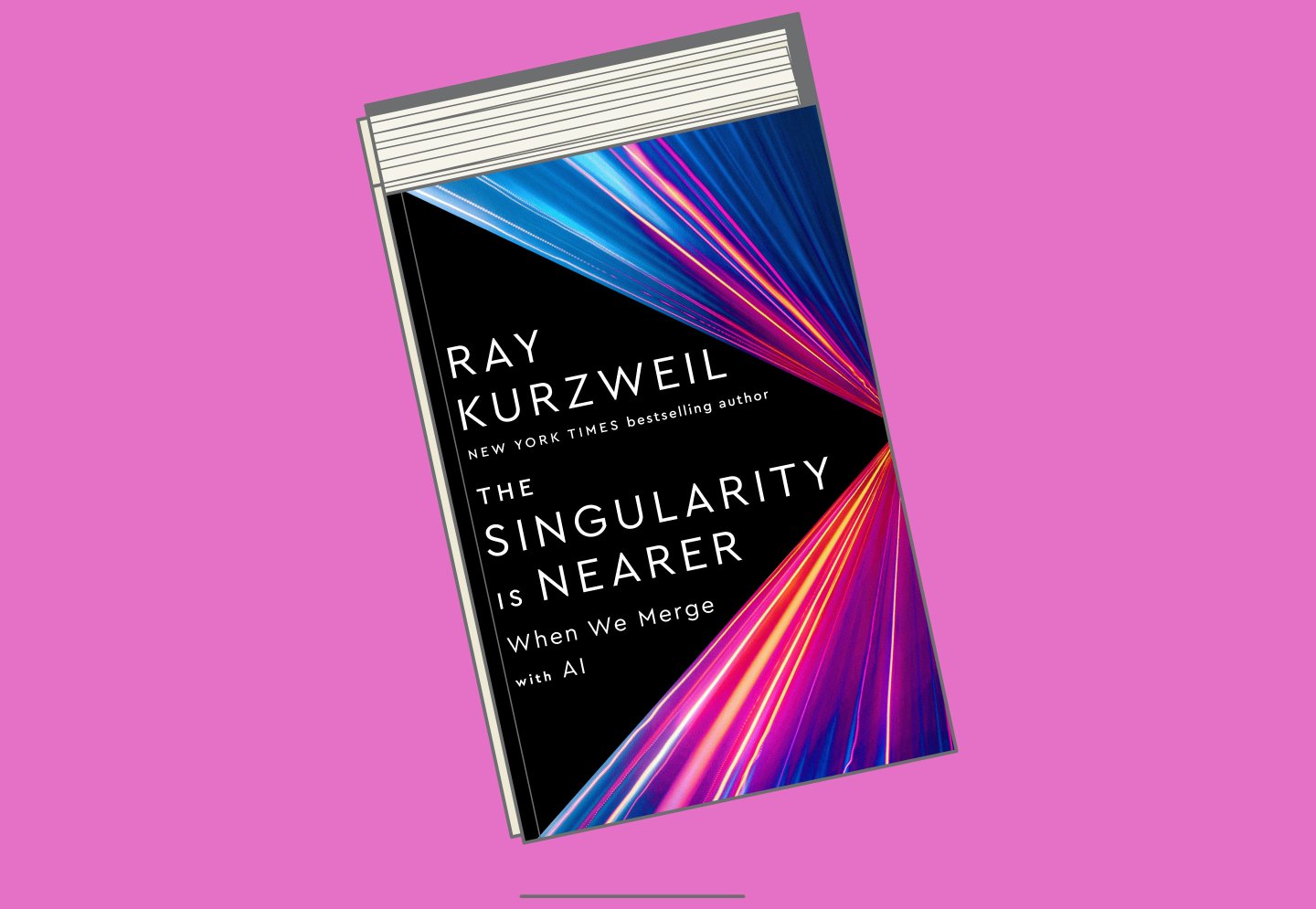
“The Singularity is Nearer When We Merge with AI” by Ray Kurzweil
Courtesy of Penguin Random House

The 2030s will bring another health revolution, which my book on health (coauthored with Terry Grossman, MD) calls the third bridge to radical life extension: medical nanorobots. This intervention will vastly extend the immune system. Our natural immune system, which includes T cells that can intelligently destroy hostile microorganisms, is very effective for many types of pathogens—so much so that we would not live long without it.

However, it evolved in an era when food and resources were very limited, and most humans had short life spans. If early humans reproduced when young and then died in their twenties, evolution had no reason to favor mutations that could have strengthened the immune system against threats that mainly appear later in life, like cancer and neurodegenerative diseases (often caused by misfolded proteins called prions). Likewise, because many viruses come from livestock, our evolutionary ancestors who existed before animal domestication did not evolve strong defenses against them.

Nanorobots not only will be programmed to destroy all types of pathogens but will be able to treat metabolic diseases. Except for the heart and the brain, our major internal organs put substances into the bloodstream or remove them, and many diseases result from their malfunction. For example, type 1 diabetes is caused by failure of the pancreatic islet cells to produce insulin.

Medical nanorobots will monitor the blood supply and increase or decrease various substances, including hormones, nutrients, oxygen, carbon dioxide, and toxins, thus augmenting or even replacing the function of the organs. Using these technologies, by the end of the 2030s we will largely be able to overcome diseases and the aging process.

The 2020s will feature increasingly dramatic pharmaceutical and nutritional discoveries, largely driven by advanced AI—not enough to cure aging on their own, but sufficient to extend many lives long enough to reach the third bridge. And so, by around 2030, the most diligent and informed people will reach “longevity escape velocity”—a tipping point at which we can add more than a year to our remaining life expectancy for each calendar year that passes. The sands of time will start running in rather than out.

The fourth bridge to radical life extension will be the ability to essentially back up who we are, just as we do routinely with all of our digital information. As we augment our biological neocortex with realistic (albeit much faster) models of the neocortex in the cloud, our thinking will become a hybrid of the biological thinking we are accustomed to today and its digital extension. The digital portion will expand exponentially and ultimately predominate. It will become powerful enough to fully understand, model, and simulate the biological portion, enabling us to back up all of our thinking. This scenario will become realistic as we approach the Singularity in the mid-2040s.

The ultimate goal is to put our destiny in our own hands, not in the metaphorical hands of fate—to live as long as we wish. But why would anyone ever choose to die? Research shows that those who take their own lives are typically in unbearable pain, whether physical or emotional.  While advances in medicine and neuroscience cannot prevent all of those cases, they will likely make them much rarer.

Once we have backed ourselves up, how could we die, anyway? The cloud already has many backups of all of the information it contains, a feature that will be greatly enhanced by the 2040s. Destroying all copies of oneself may be close to impossible. If we design mind-backup systems in such a way that a person can easily choose to delete their files (hoping to maximize personal autonomy), this inherently creates security risks where a person could be tricked or coerced into making such a choice and could increase vulnerability to cyberattacks.

On the other hand, limiting people’s ability to control this most intimate of their data impinges on an important freedom. I am optimistic, though, that suitable safeguards can be deployed, much like those that have successfully protected nuclear weapons for decades.

If you restored your mind file after biological death, would you really be restoring yourself? That is not a scientific question but a philosophical one, which we’ll have to grapple with during the lifetimes of most people already alive today.

Finally, some have an ethical concern about equity and inequality. A common challenge to these predictions about longevity is that only the wealthy will be able to afford the technologies of radical life extension. My response is to point out the history of the cell phone. You indeed had to be wealthy to have a mobile phone as recently as thirty years ago, and that device did not work very well. Today there are billions of phones, and they do a lot more than just make phone calls. They are now memory extenders that let us access almost all of human knowledge. Such technologies start out being expensive with limited function. By the time they are perfected, they are affordable to almost everyone. And the reason is the exponential price-performance improvement inherent in information technologies.

Adapted from The Singularity is Nearer: When We Merge With AI by Ray Kurzweil, published by Viking. Copyright © 2024 by Ray Kurzweil. Reprinted courtesy of Penguin Random House.

About the Author
By Ray Kurzweil
See full bioRight Arrow Button Icon
Add Fortune on Google for similar content.

Latest in

Finance
Lorem ipsum dolor sit amet, consectetur adipiscing elit, sed do eiusmod tempor incididunt ut labore et dolore magna aliqua. Ut enim ad minim veniam
By Fortune Editors
October 20, 2025
Finance
Lorem ipsum dolor sit amet, consectetur adipiscing elit, sed do eiusmod tempor incididunt ut labore et dolore magna aliqua. Ut enim ad minim veniam
By Fortune Editors
October 20, 2025
Finance
Lorem ipsum dolor sit amet, consectetur adipiscing elit, sed do eiusmod tempor incididunt ut labore et dolore magna aliqua. Ut enim ad minim veniam
By Fortune Editors
October 20, 2025
Finance
Lorem ipsum dolor sit amet, consectetur adipiscing elit, sed do eiusmod tempor incididunt ut labore et dolore magna aliqua. Ut enim ad minim veniam
By Fortune Editors
October 20, 2025
Finance
Lorem ipsum dolor sit amet, consectetur adipiscing elit, sed do eiusmod tempor incididunt ut labore et dolore magna aliqua. Ut enim ad minim veniam
By Fortune Editors
October 20, 2025
Finance
Lorem ipsum dolor sit amet, consectetur adipiscing elit, sed do eiusmod tempor incididunt ut labore et dolore magna aliqua. Ut enim ad minim veniam
By Fortune Editors
October 20, 2025

Most Popular

Finance
Lorem ipsum dolor sit amet, consectetur adipiscing elit, sed do eiusmod tempor incididunt ut labore et dolore magna aliqua. Ut enim ad minim veniam
By Fortune Editors
October 20, 2025
Finance
Lorem ipsum dolor sit amet, consectetur adipiscing elit, sed do eiusmod tempor incididunt ut labore et dolore magna aliqua. Ut enim ad minim veniam
By Fortune Editors
October 20, 2025
Finance
Lorem ipsum dolor sit amet, consectetur adipiscing elit, sed do eiusmod tempor incididunt ut labore et dolore magna aliqua. Ut enim ad minim veniam
By Fortune Editors
October 20, 2025
Finance
Lorem ipsum dolor sit amet, consectetur adipiscing elit, sed do eiusmod tempor incididunt ut labore et dolore magna aliqua. Ut enim ad minim veniam
By Fortune Editors
October 20, 2025
Finance
Lorem ipsum dolor sit amet, consectetur adipiscing elit, sed do eiusmod tempor incididunt ut labore et dolore magna aliqua. Ut enim ad minim veniam
By Fortune Editors
October 20, 2025
Finance
Lorem ipsum dolor sit amet, consectetur adipiscing elit, sed do eiusmod tempor incididunt ut labore et dolore magna aliqua. Ut enim ad minim veniam
By Fortune Editors
October 20, 2025
Fortune Secondary Logo
Rankings
  • 100 Best Companies
  • Fortune 500
  • Global 500
  • Fortune 500 Europe
  • Most Powerful Women
  • World's Most Admired Companies
  • See All Rankings
  • Lists Calendar
Sections
  • Finance
  • Fortune Crypto
  • Features
  • Leadership
  • Health
  • Commentary
  • Success
  • Retail
  • Mpw
  • Tech
  • Lifestyle
  • CEO Initiative
  • Asia
  • Politics
  • Conferences
  • Europe
  • Newsletters
  • Personal Finance
  • Environment
  • Magazine
  • Education
Customer Support
  • Frequently Asked Questions
  • Customer Service Portal
  • Privacy Policy
  • Single Issues For Purchase
  • International Print
Commercial Services
  • Advertising
  • Fortune Brand Studio
  • Fortune Analytics
  • Fortune Conferences
  • Business Development
  • Group Subscriptions
About Us
  • Press Center
  • Work At Fortune
  • Terms And Conditions
  • Site Map
  • Press Center
  • Work At Fortune
  • Terms And Conditions
  • Site Map
  • Facebook icon
  • Twitter icon
  • LinkedIn icon
  • Instagram icon
  • Pinterest icon

Latest in

Photo: Russian President Vladimir Putin Attends ASEAN-Russia Summit
Energyputin
Russians live with fuel shortages and rationing as Putin insists the war against Ukraine will go on
By The Associated PressJuly 3, 2026
1 hour ago
bis
InvestingStock
Global stocks stage a rally as American markets take the day off
By Elaine Kurtenbach and The Associated PressJuly 3, 2026
1 hour ago
Photo: Ivanka Trump and Jared Kushner
Environmentjared kushner
Police use tear gas and pepper spray against Albanians protesting Trump family plans to develop unspoiled island into a luxury resort
By The Associated PressJuly 3, 2026
1 hour ago
Kevin Warsh, chairman of the US Federal Reserve, during a news conference following a Federal Open Market Committee (FOMC) meeting in Washington, DC, US, on Wednesday, June 17, 2026.
EconomyKevin Warsh
Inside the mind of Kevin Warsh: As told by his former boss Condoleezza Rice, his college friend, and his closest partner during the financial crisis
By Eleanor PringleJuly 3, 2026
2 hours ago
Microsoft’s next big bet isn’t on a model but on becoming the Swiss Army knife of enterprise AI
AIMicrosoft
Microsoft’s next big bet isn’t on a model but on becoming the Swiss Army knife of enterprise AI
By Sheryl Estrada and Sebastian HerreraJuly 3, 2026
2 hours ago
Those bots sending discounts to your email is dynamic pricing in action. Get revenge on those bots by abandoning your cart
RetailConsumer Spending
Those bots sending discounts to your email is dynamic pricing in action. Get revenge on those bots by abandoning your cart
By Catherina GioinoJuly 3, 2026
2 hours ago

Most Popular

As Big Tech showers employees with perks to win the talent war, Nvidia built a nearly $5 trillion company by making people pay for their own lunch
Big Tech
As Big Tech showers employees with perks to win the talent war, Nvidia built a nearly $5 trillion company by making people pay for their own lunch
By Marco Quiroz-GutierrezJuly 1, 2026
2 days ago
Mark Zuckerberg feeds his cows macadamia nuts and beer to create the 'highest-quality beef in the world' on his $300 million estate in Hawaii
Success
Mark Zuckerberg feeds his cows macadamia nuts and beer to create the 'highest-quality beef in the world' on his $300 million estate in Hawaii
By Sasha RogelbergJuly 2, 2026
17 hours ago
Current price of oil as of July 2, 2026
Personal Finance
Current price of oil as of July 2, 2026
By Joseph HostetlerJuly 2, 2026
20 hours ago
Americans are escaping the U.S. for New Zealand where house prices have hit a new low—but only wealthy Americans with $3 million spare can invest
Success
Americans are escaping the U.S. for New Zealand where house prices have hit a new low—but only wealthy Americans with $3 million spare can invest
By Emma BurleighJuly 2, 2026
19 hours ago
Today, Emily Blunt is worth $80 million thanks to her Hollywood career—but she actually wanted to be a UN Spanish translator on $80K
Success
Today, Emily Blunt is worth $80 million thanks to her Hollywood career—but she actually wanted to be a UN Spanish translator on $80K
By Orianna Rosa RoyleJuly 2, 2026
1 day ago
Egg companies made $1.22 billion in profit off a $6 carton — now they’re buying their way out of a price-fixing case with 53 million donated eggs
Law
Egg companies made $1.22 billion in profit off a $6 carton — now they’re buying their way out of a price-fixing case with 53 million donated eggs
By Wyatte Grantham-Philips and The Associated PressJuly 2, 2026
16 hours ago

© 2026 Fortune Media IP Limited. All Rights Reserved. Use of this site constitutes acceptance of our and Privacy Policy |  | Do Not Sell/Share My Personal Information
FORTUNE is a trademark of Fortune Media IP Limited, registered in the U.S. and other countries. FORTUNE may receive compensation for some links to products and services on this website. Offers may be subject to change without notice.